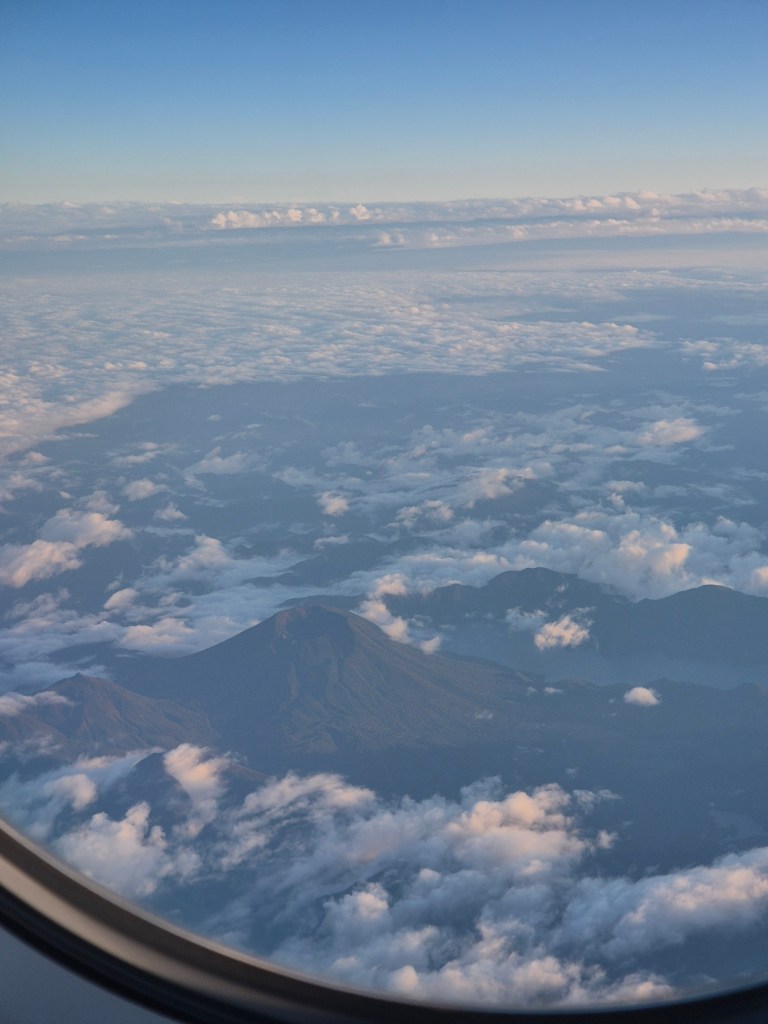
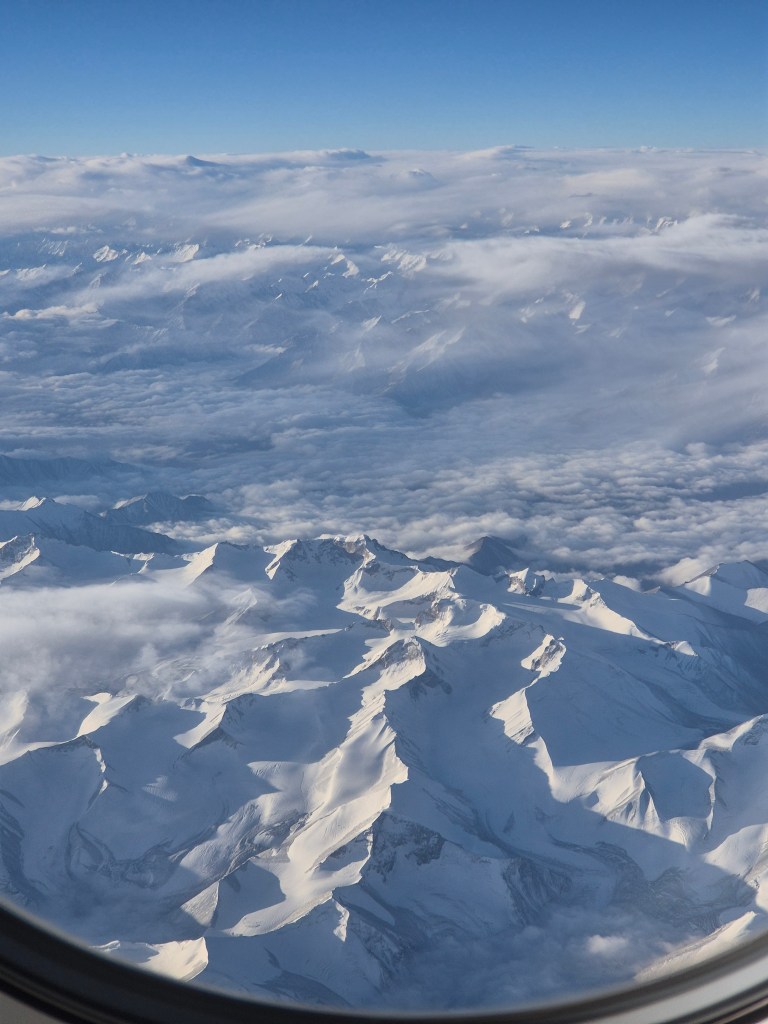
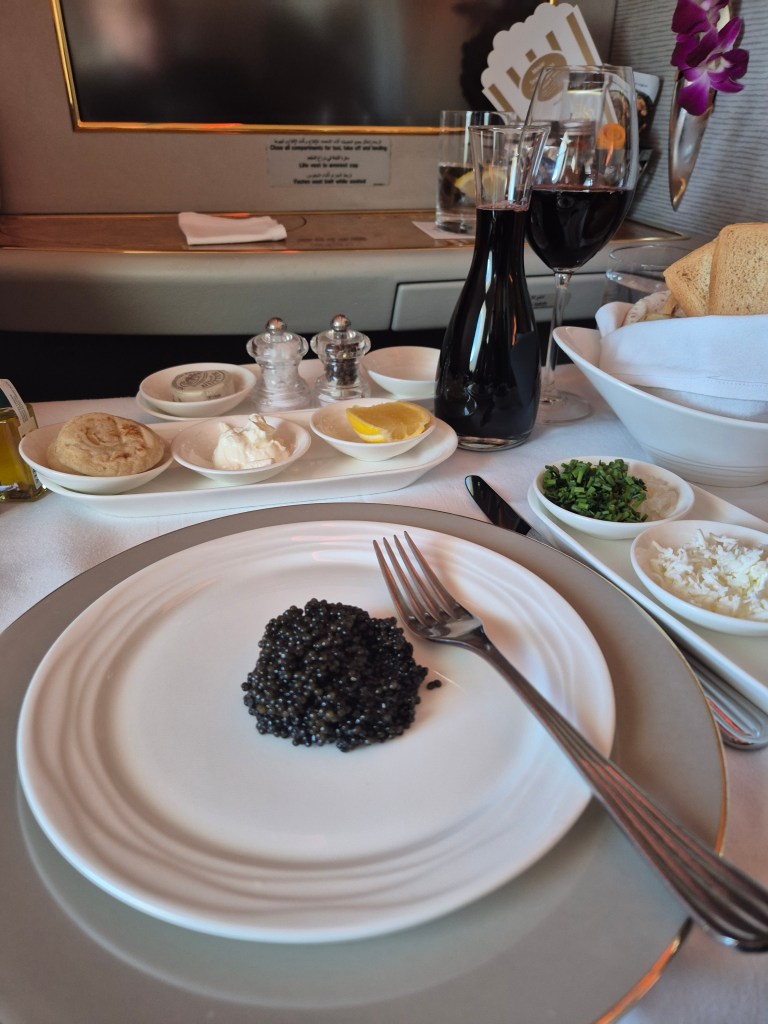
The flight from Manchester was uneventful except for a frenetic change in Dubai plus, on both flights the legroom was a little tight….
We arrived in Tokyo in a rainstorm early evening although it was already dark. Felt like home!
Our first interaction with the Japanese was with our very young driver who picked us up from the airport and then proceeded to drive at 100mph, in the fast lane, in the rain, exploring texts and apps on his phone. So, I shouted at him, and true to the cultural norms I’d read about, he respected his elders and stopped, even to the extent of not answering it when it rang 3 times!
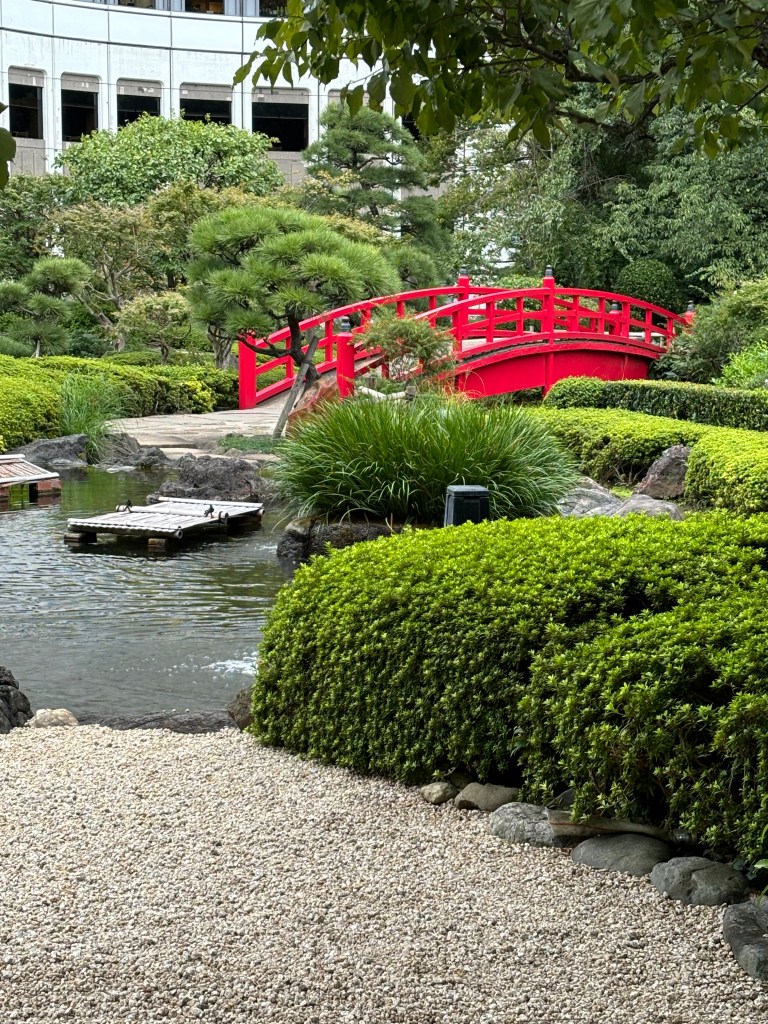
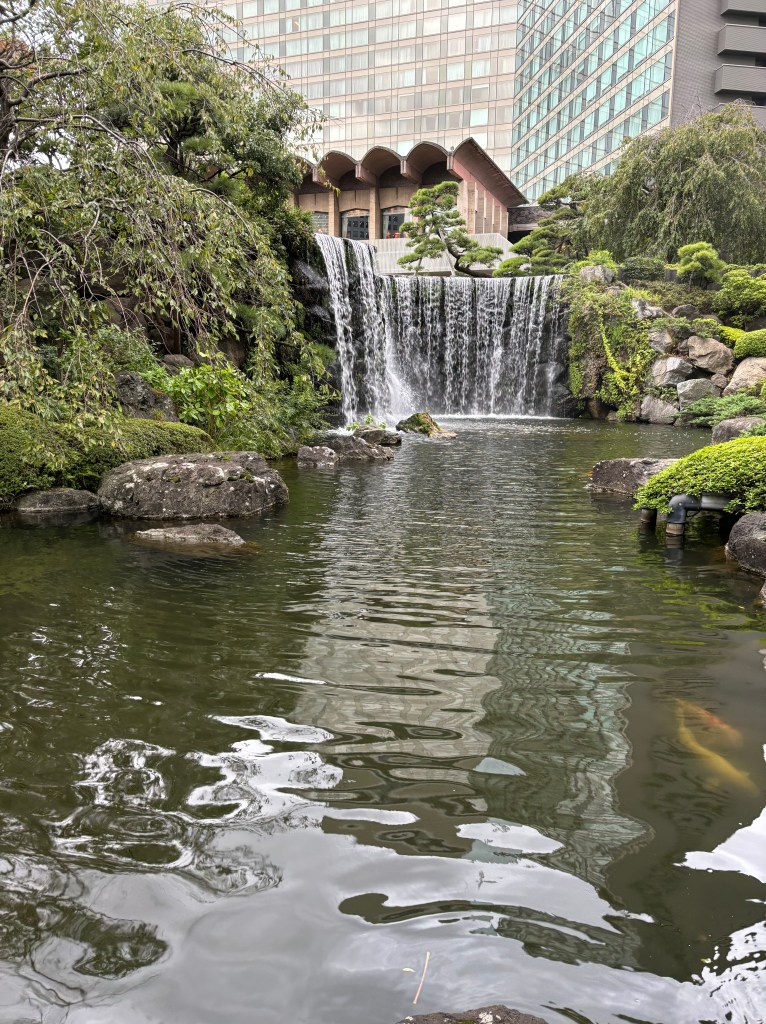
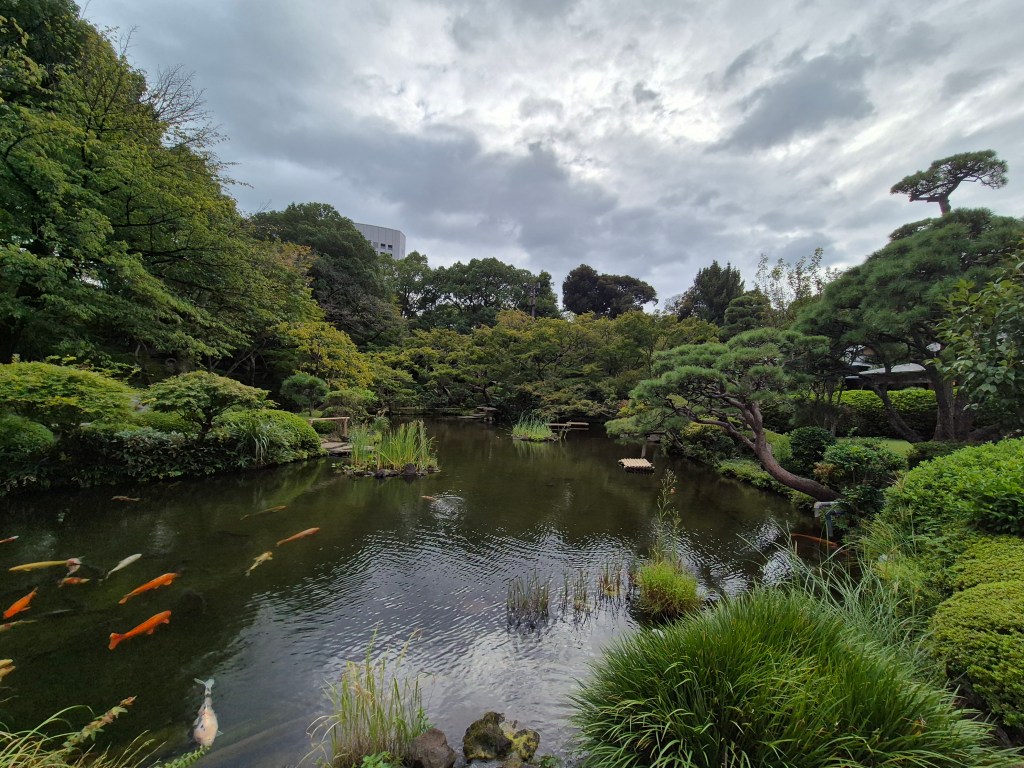
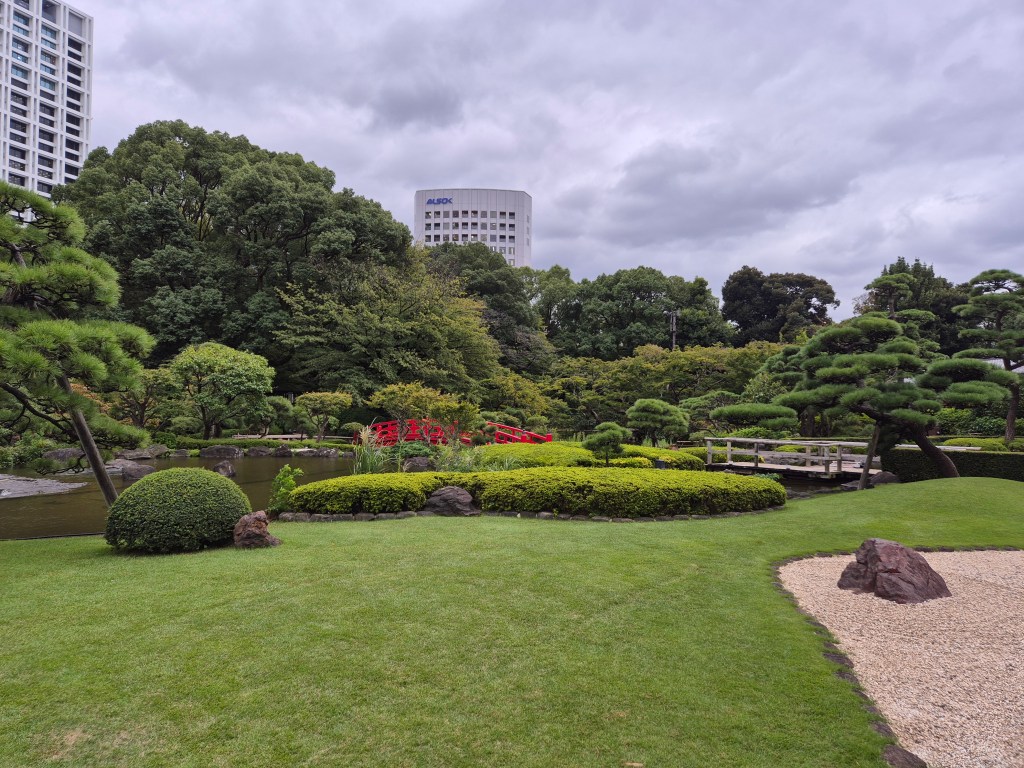
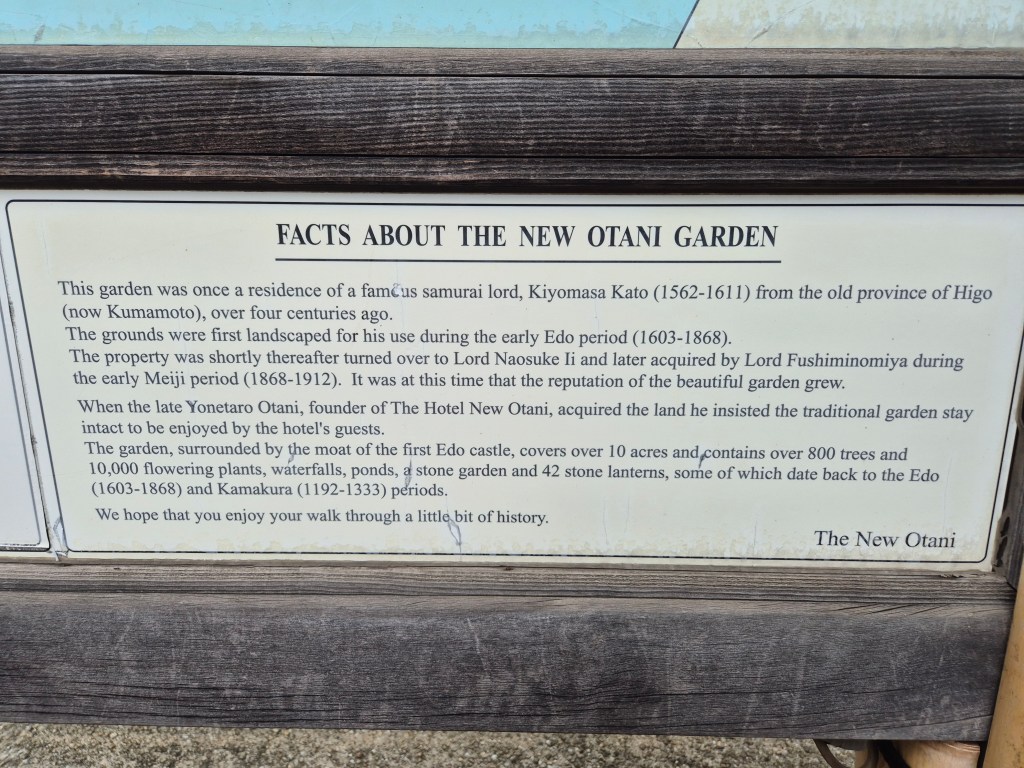
Our first days were spent in the splendid New Otani Hotel where we could try and get over our jet lag. It was massively tall and famous for its Japanese garden dating back to 1700’s.

2 days later we moved hotels to meet up with the group that had signed up for Agape World’s Peace and Reconciliation trip arranged by the wonderful and underrated Keiko Holmes (read her story at Agapeworld.org), her son Danny the organiser and 9 others with personal reasons to come to Japan with relatives (mainly fathers) who had been FEPOWs ( Far east prisoners of war) in WWII.
Great people and fun getting to know them all.
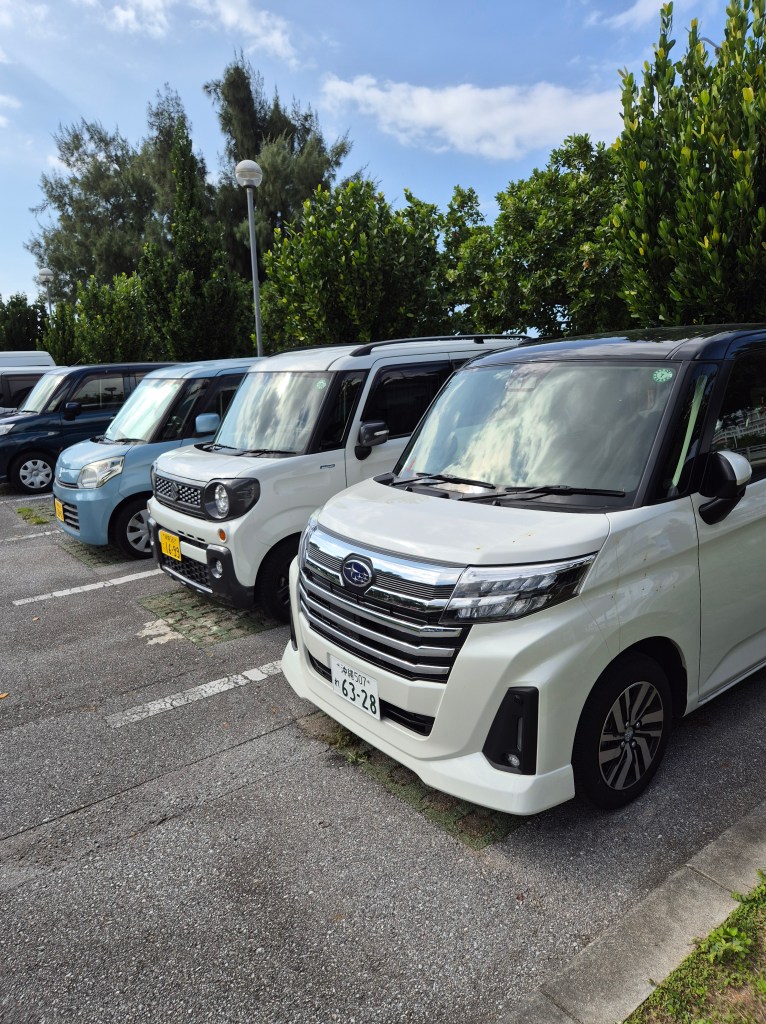
As an aside, the cars in Japan are a bit different to ours
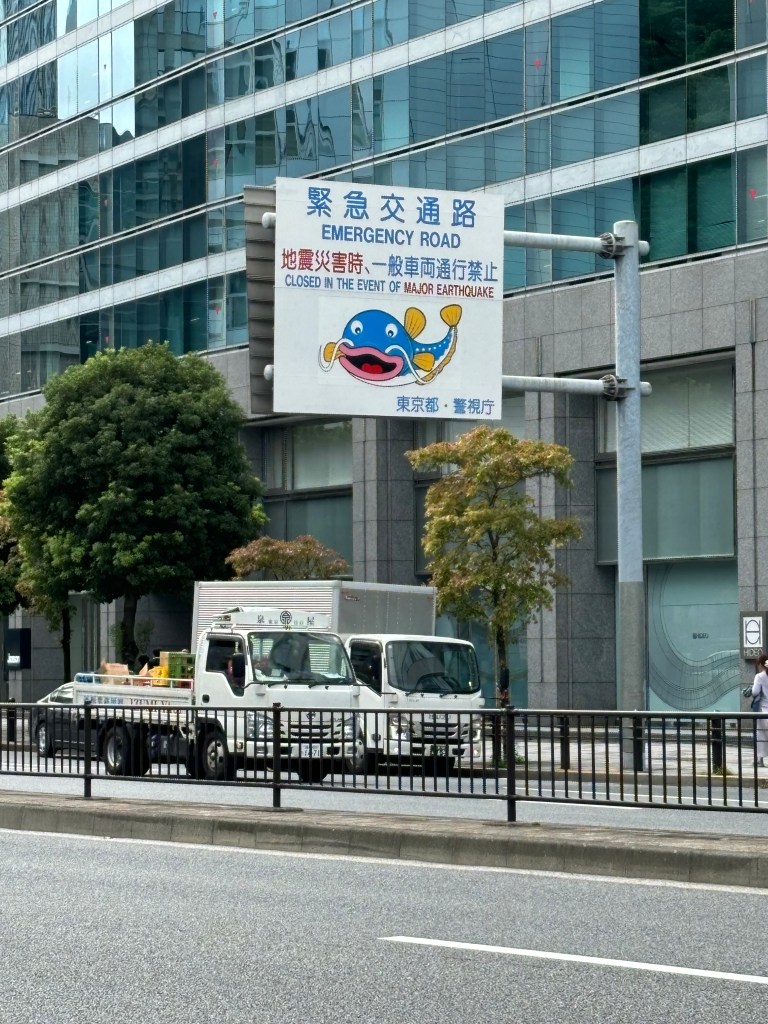
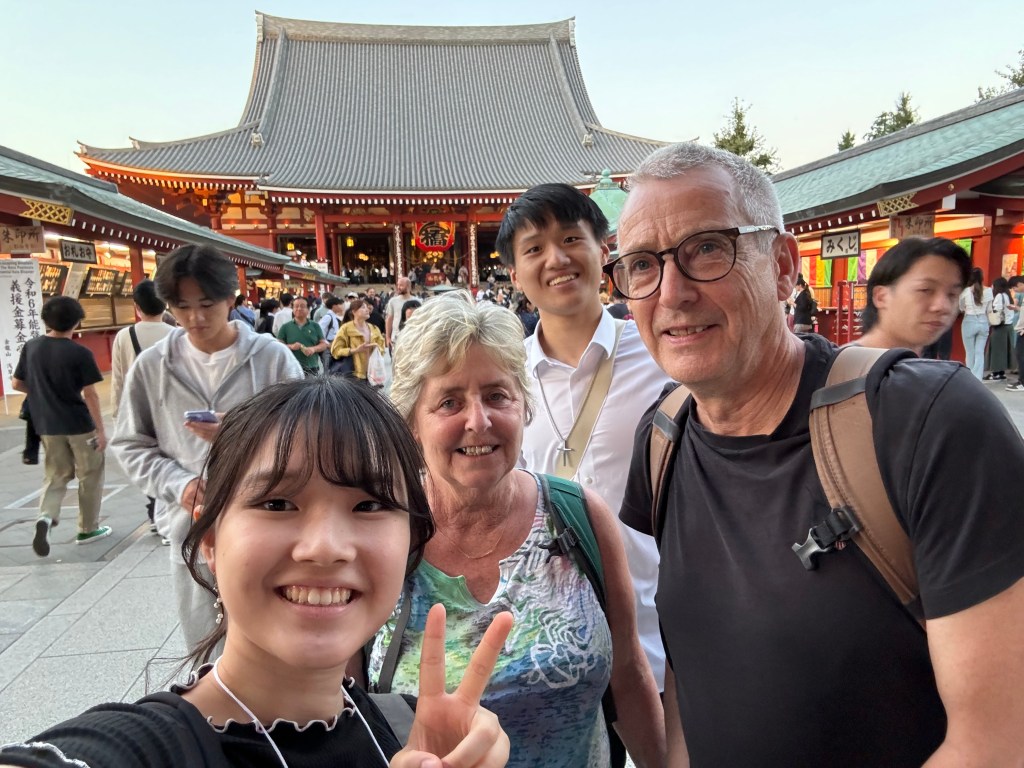
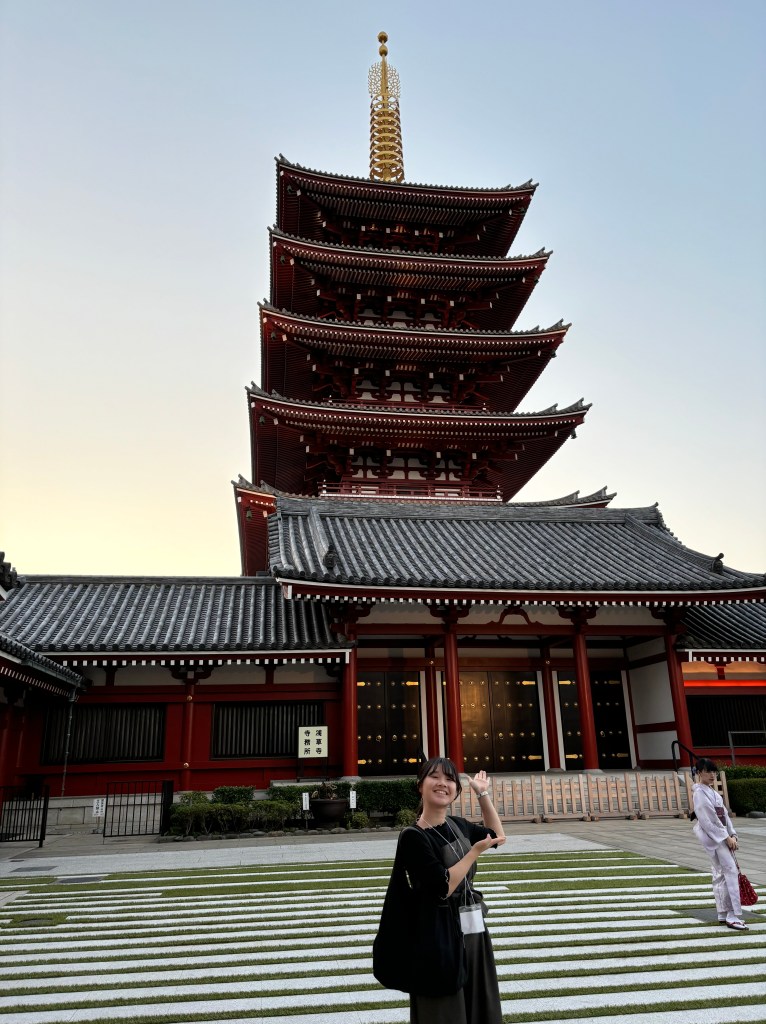
We enjoyed being taken out sightseeing in Tokyo by students from the International Christian University (ICU), a welcome party on 31st floor penthouse of an Agape World Japanese member and our first taste of real Japanese cuisine sushi and sake.
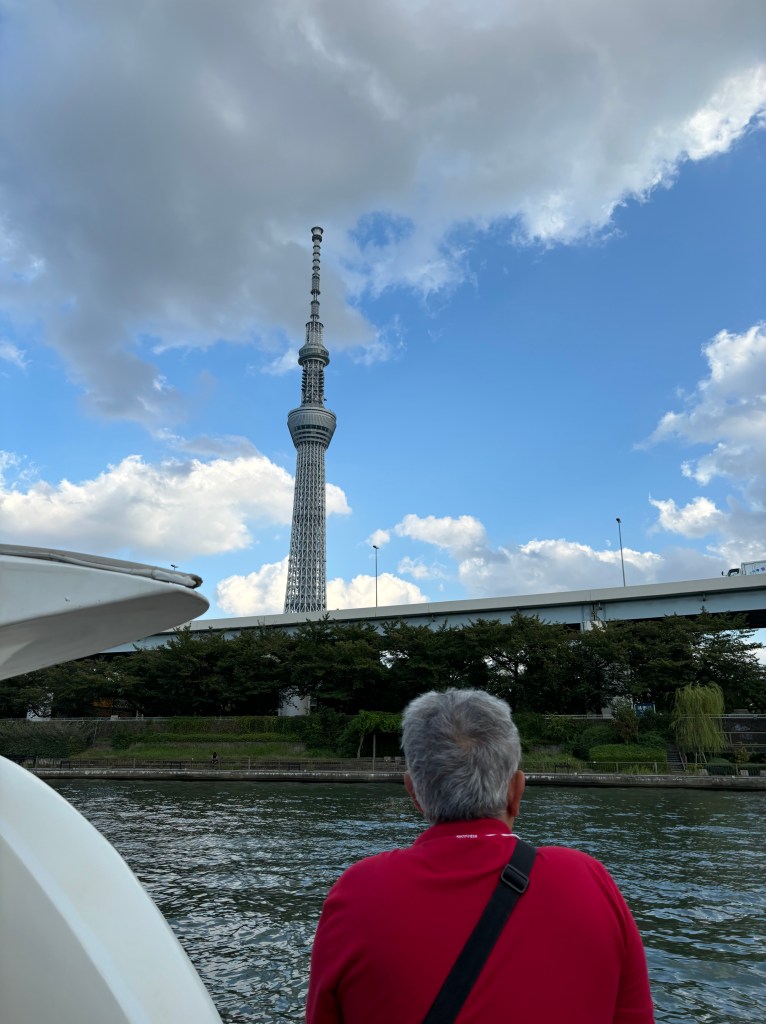
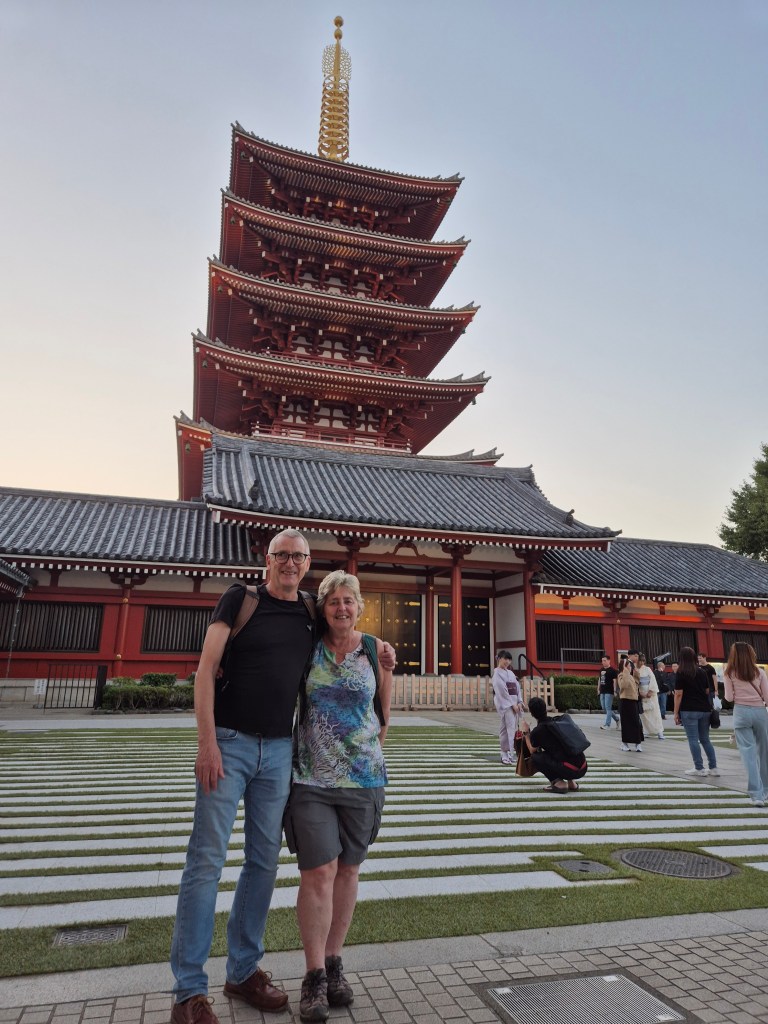

We went to a local church for a service that was translated into English for us and was very well attended. We were introduced and hand shakes all around plus lots of staring especially when they were told why we were there.
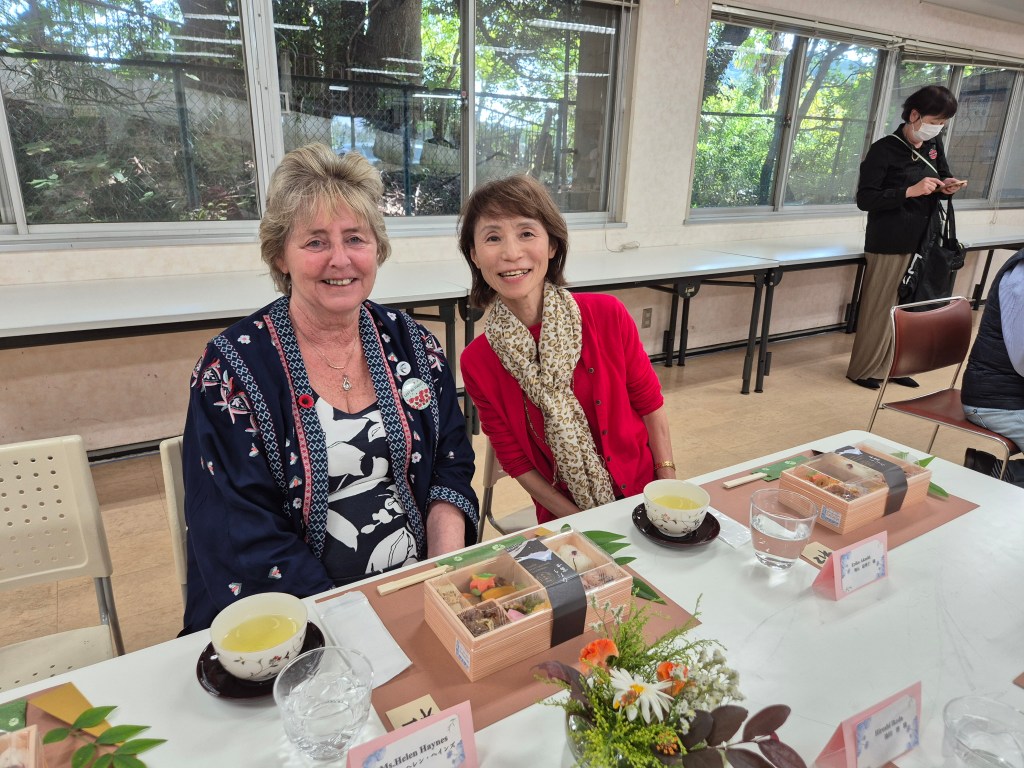
Prior to our first Bento box lunch, I was asked to talk about why I was there.


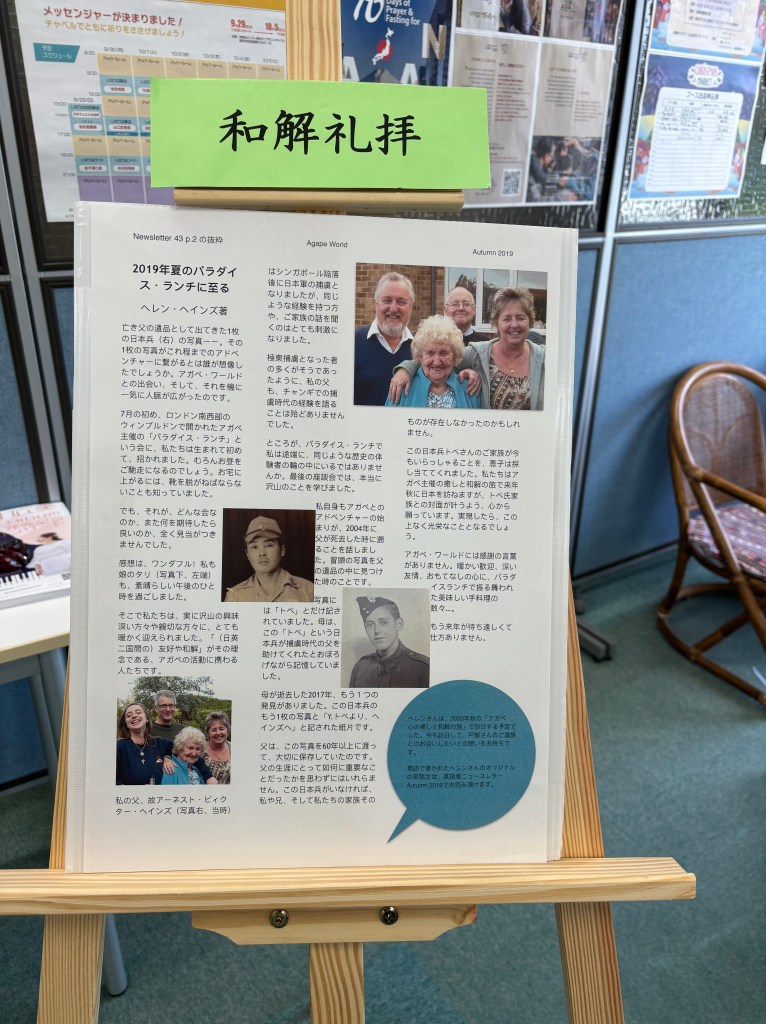
On the way out I noticed this which then made sense of why I was asked to speak.
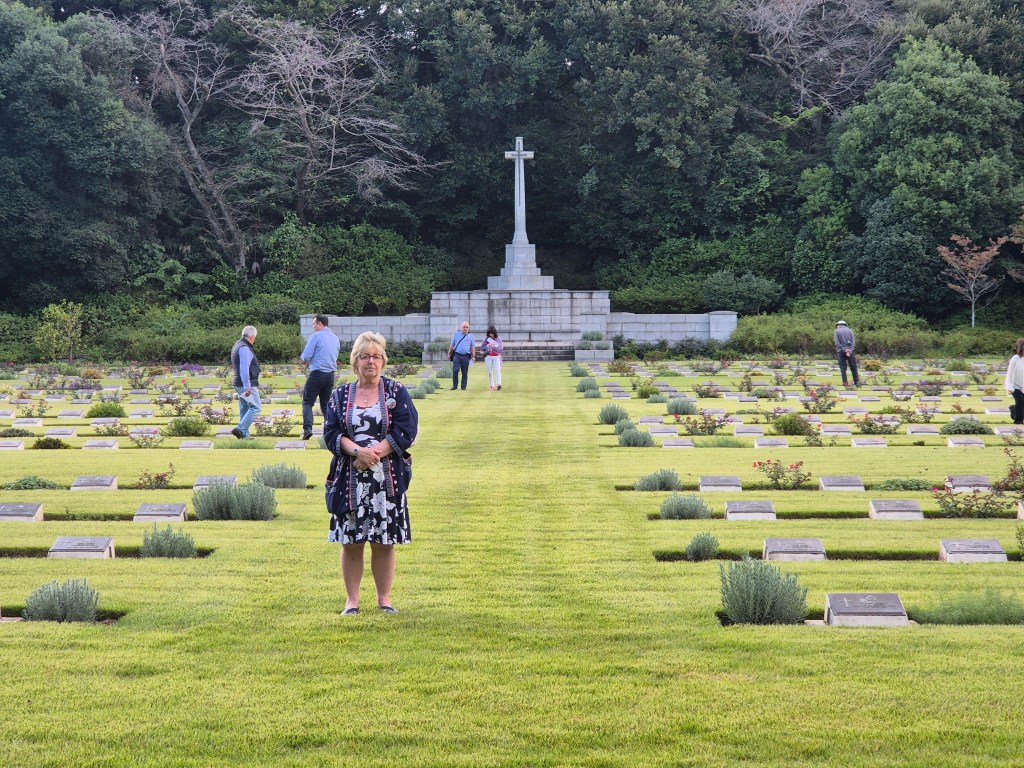
We had a quick service and visit to the British Commonwealth War Cemetery where you realised we were the children of the lucky ones who made it home.
We then went to ICU to meet with the students and staff to each tell our stories. Twice in a day was too much even though I had prepared a PowerPoint presentation. Eimi, one of the students had translated it into Japanese so they could read it.
I met a staff member from UK whose grandfather had been in Changi. More Japanese snacks and back to the hotel.
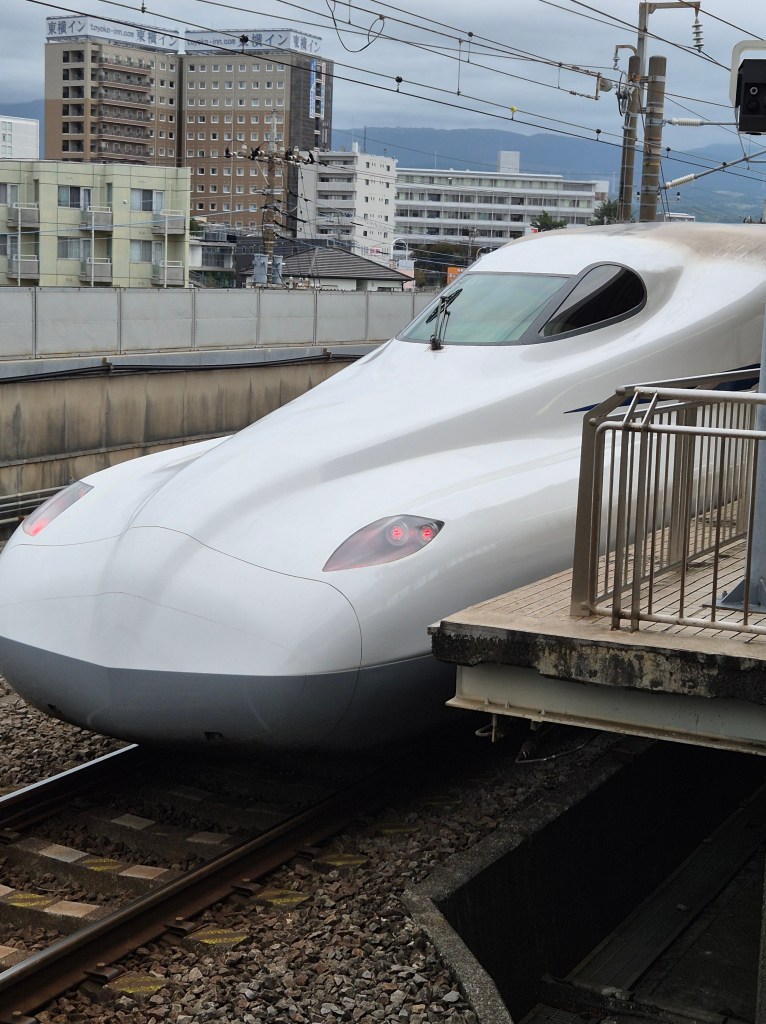
Time to move on. We went by bullet train to Hanoke, a hot springs area where Keiko used to take the FEPOWs and situated relatively close to Mount Fuji.. She had told me how relaxing and comfortable the Hotel de Yama was and we got our initiation into the world of Japanese etiquette. First, remove outside shoes and wear slippers in the main areas. When you get to your room, there is a hallway, remove slippers and be in bare feet or socks in the living/bedroom area. If you go to the bathroom, remember to put on your toilet slippers.

We experienced our 1st Onsen, the public bath found in most rural hotels. There is a very strict protocol you must adhere to. It involves undressing completely, washing thoroughly and then with a modesty towel joining the bath. It is segregated, red indicates women and blue for men (same for toilets of which there are 1000’s all over the country). Water is very hot and you just sit and look at the mountains or the wall depending on your Onsen. If you’re lucky, there may be a cold plunge pool. Get out, shower again and the put on your Yukata, a light kimono. Remember to cross the front left over right and if female, wear the belt around your waist, if male, it goes on your hips.

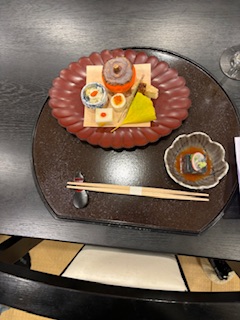
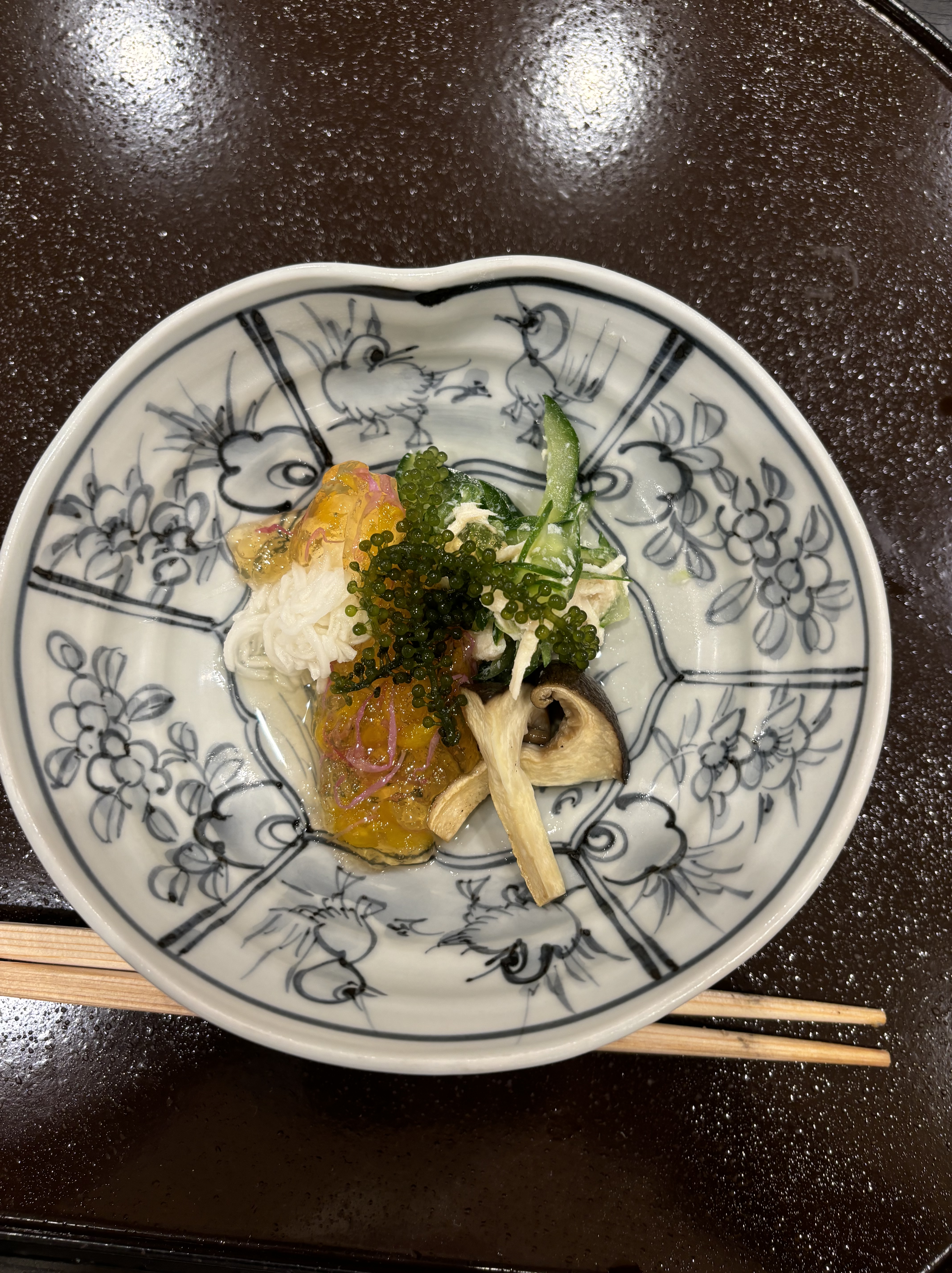
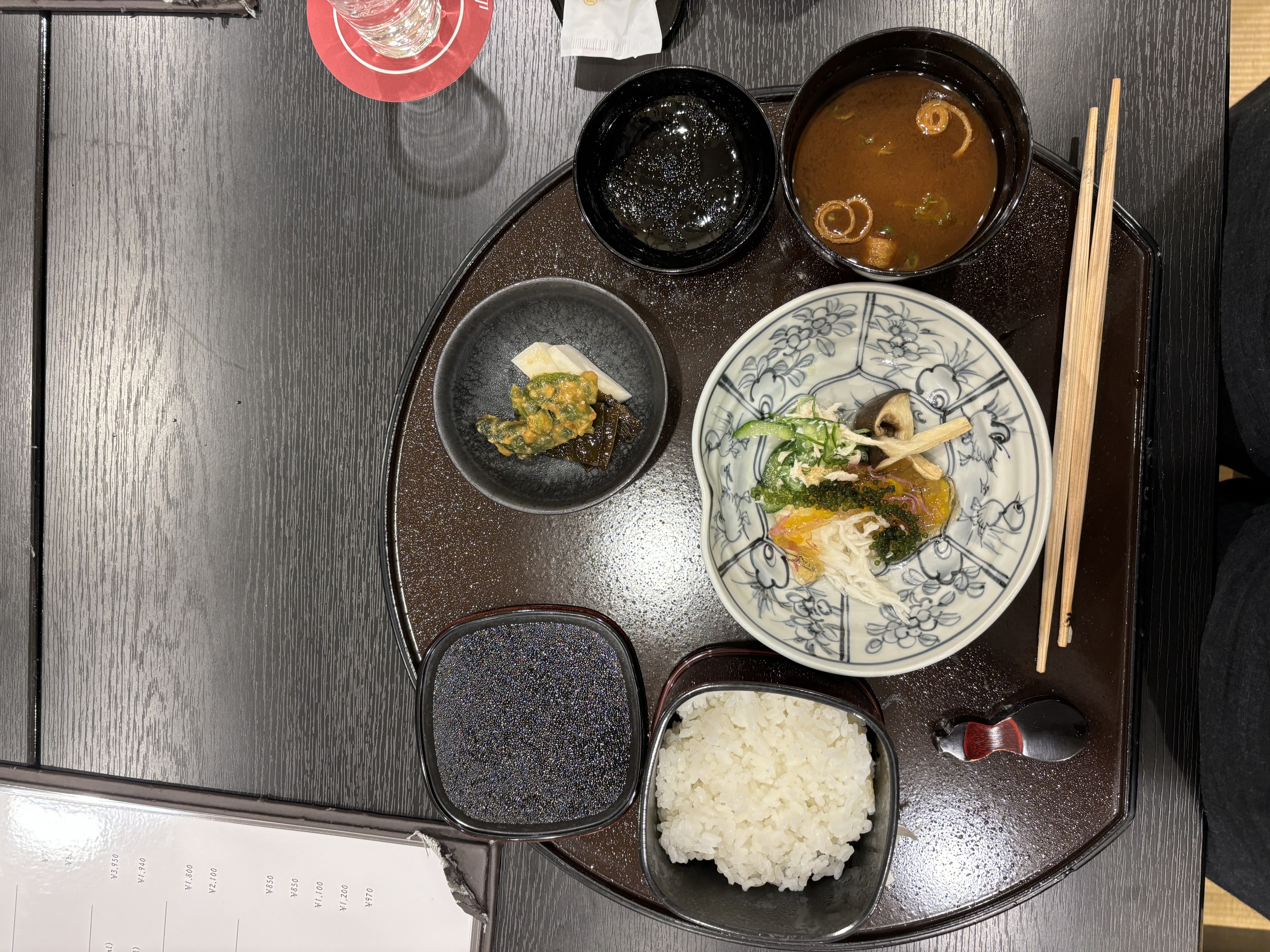
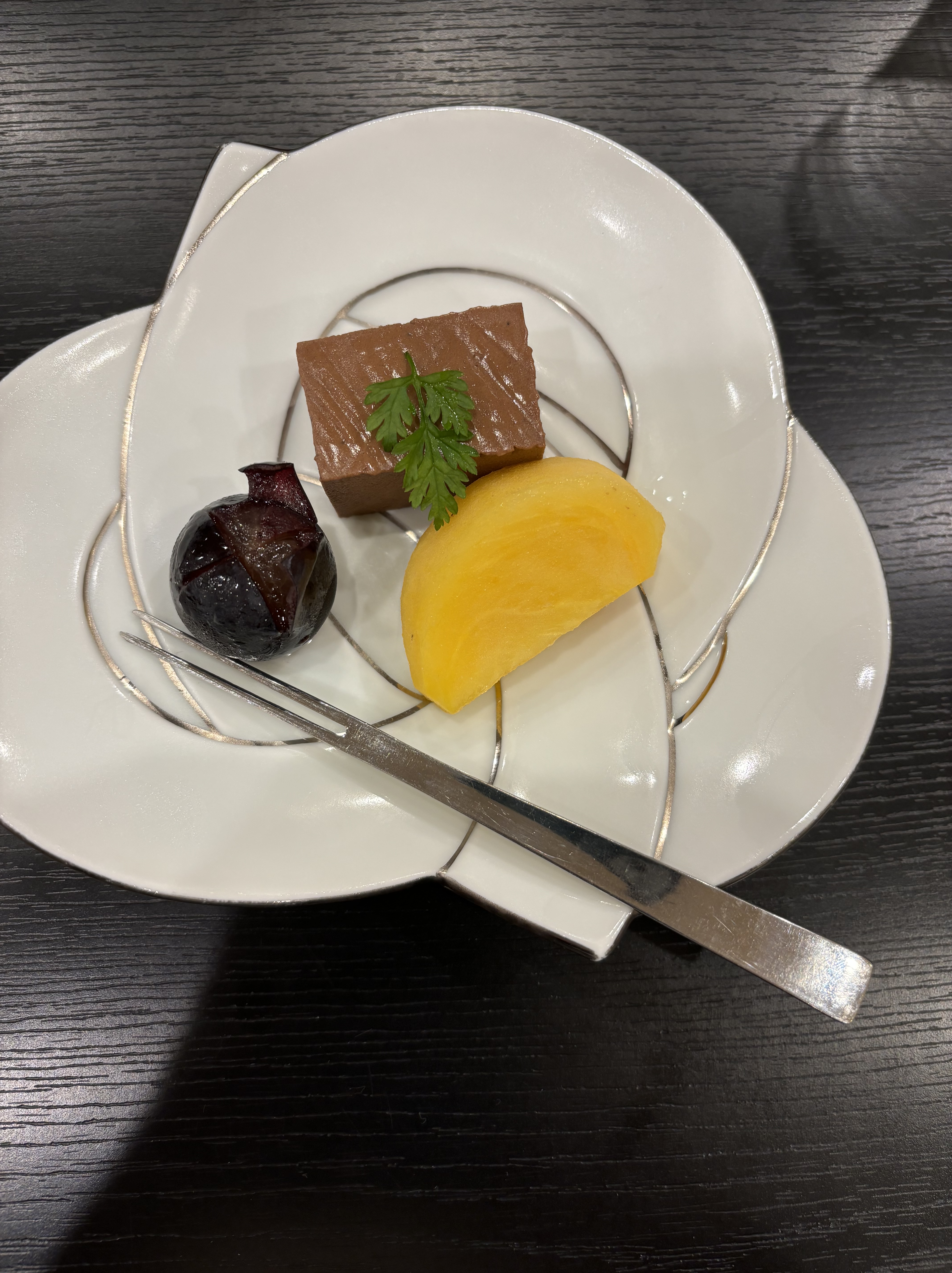
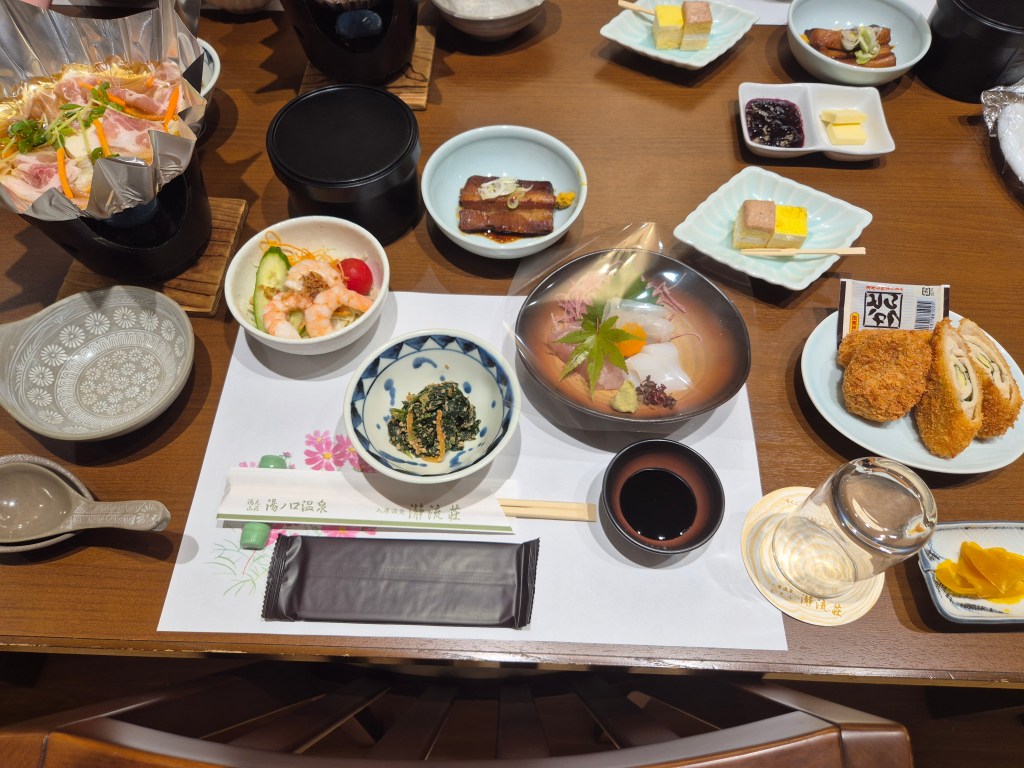
Then time for our first Japanese banquet. So much food, some delicious, some not so and getting to use chopsticks for everything is a feat worth mastering.
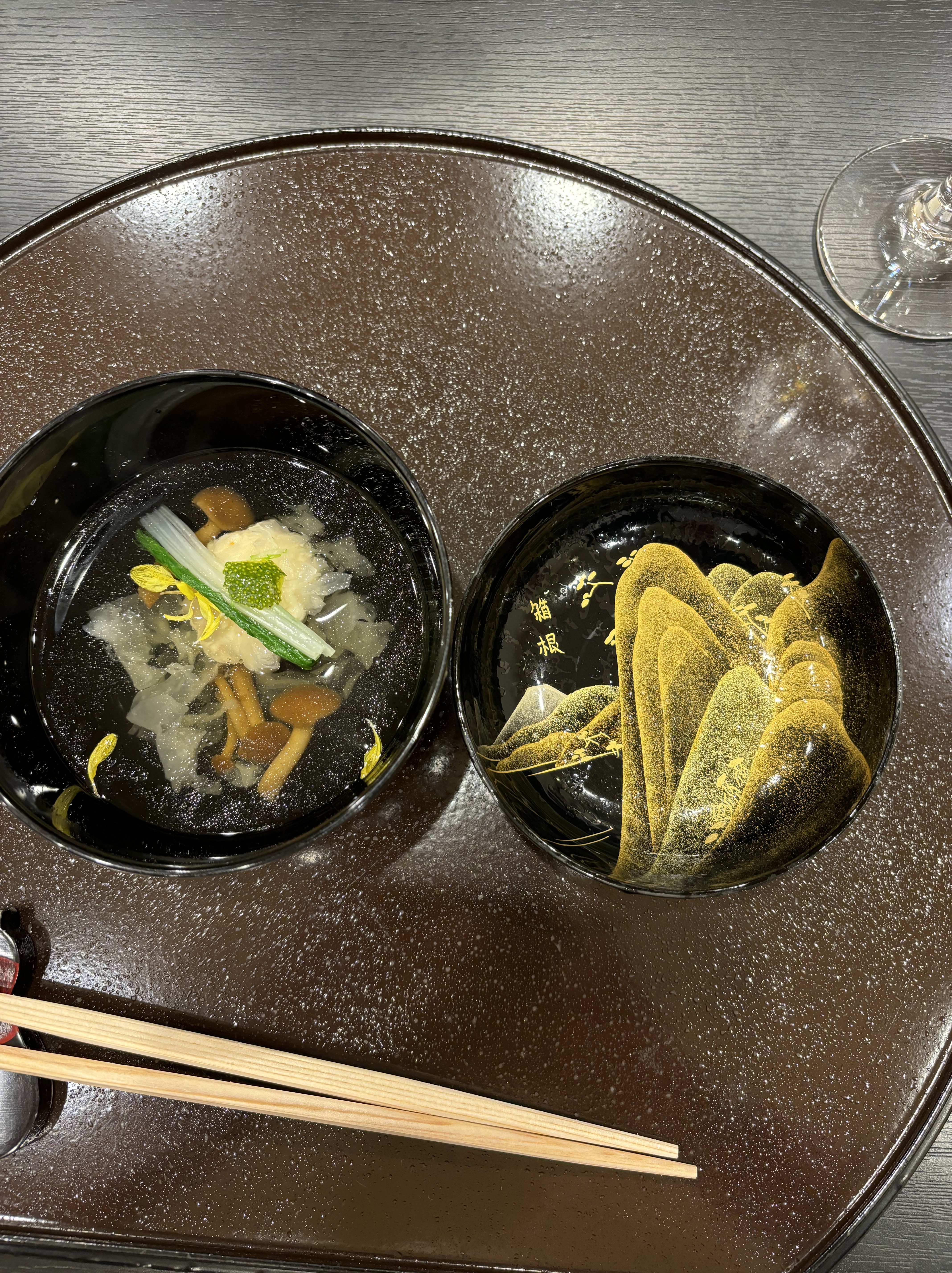
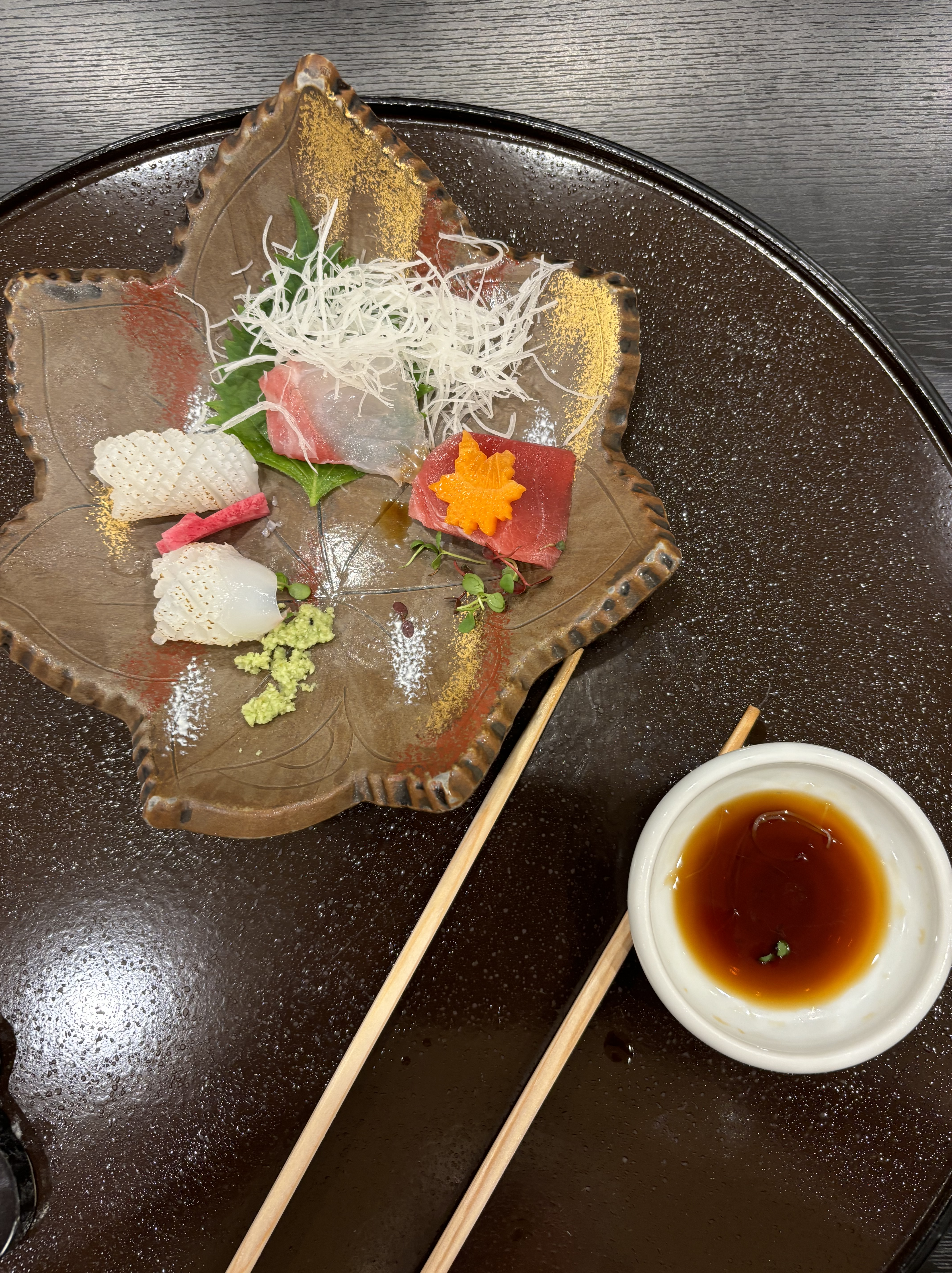
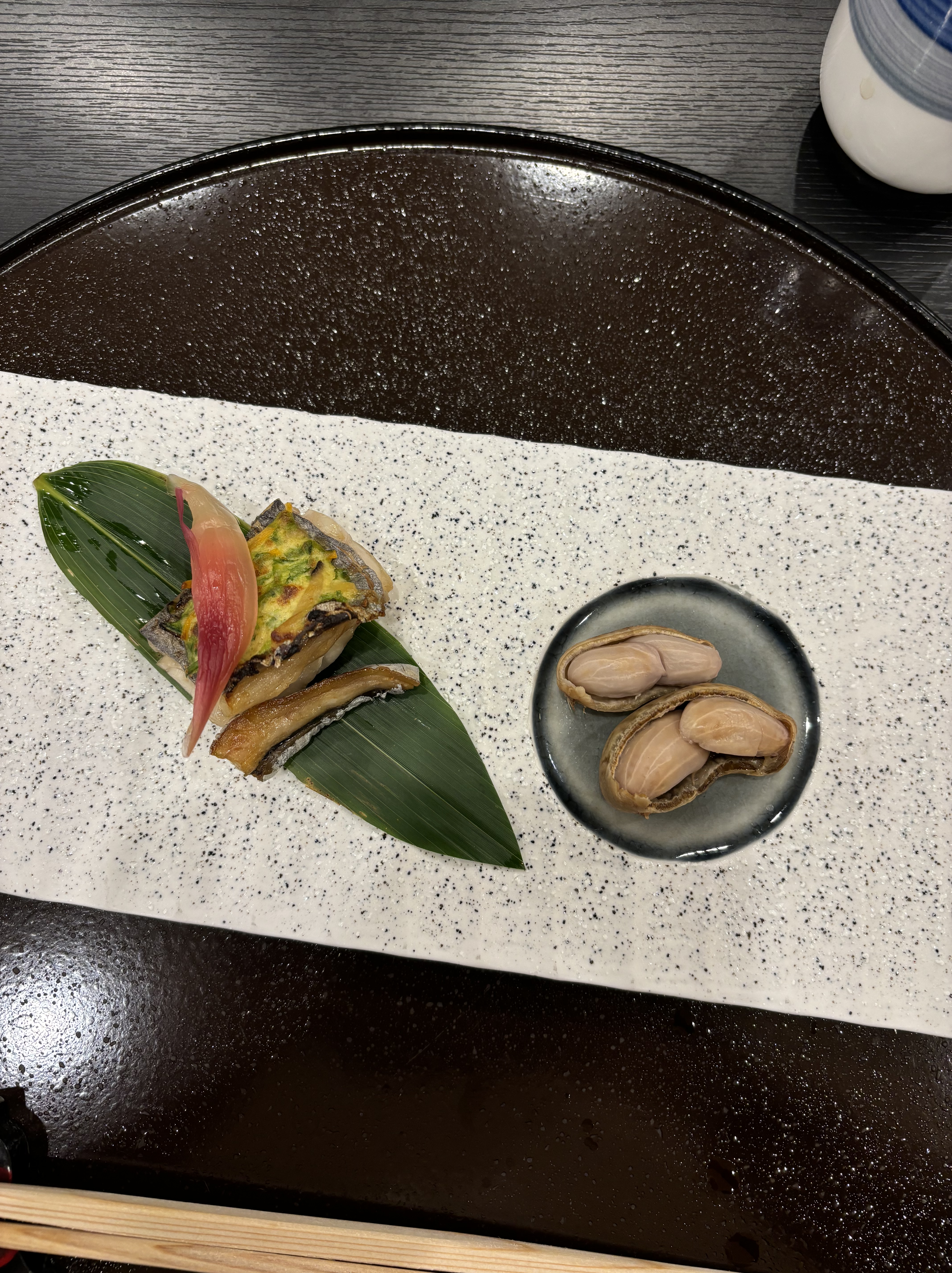
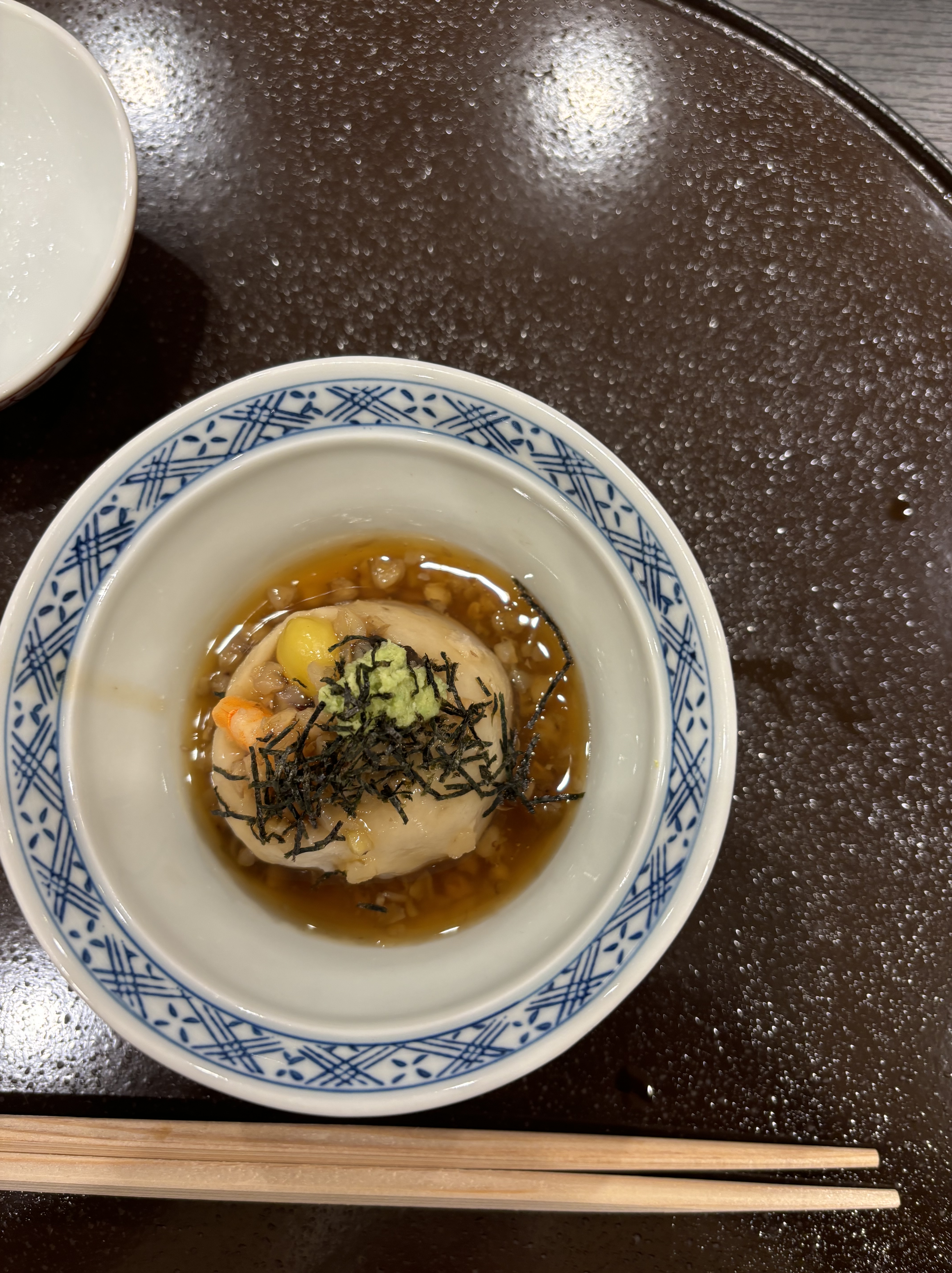
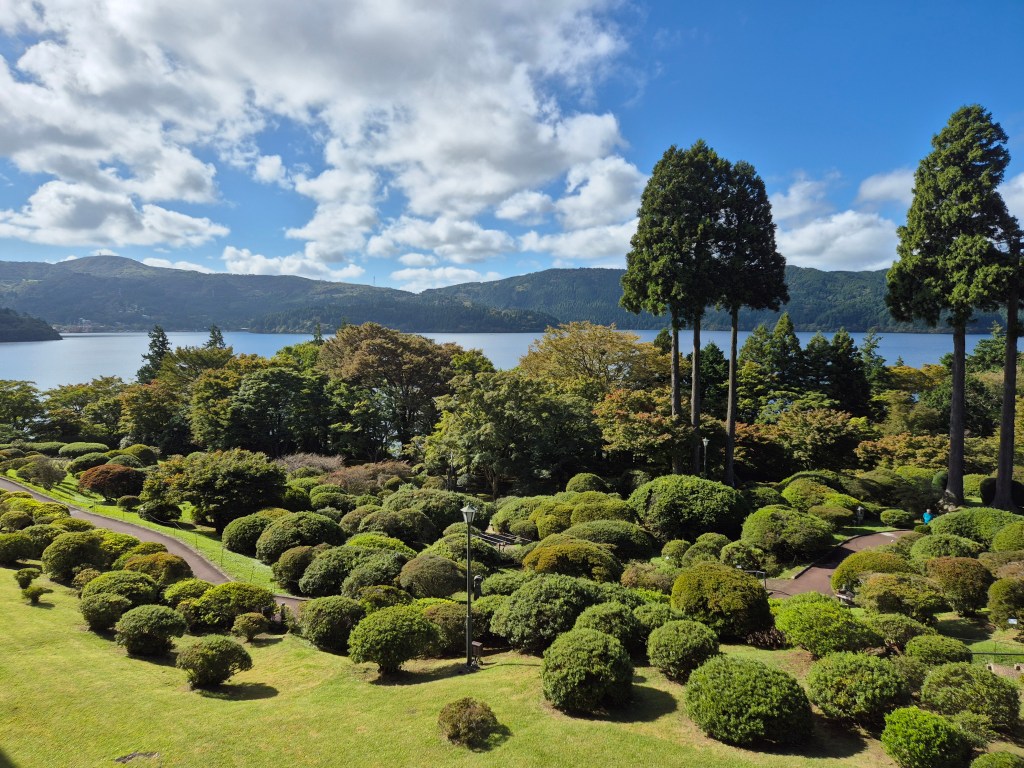
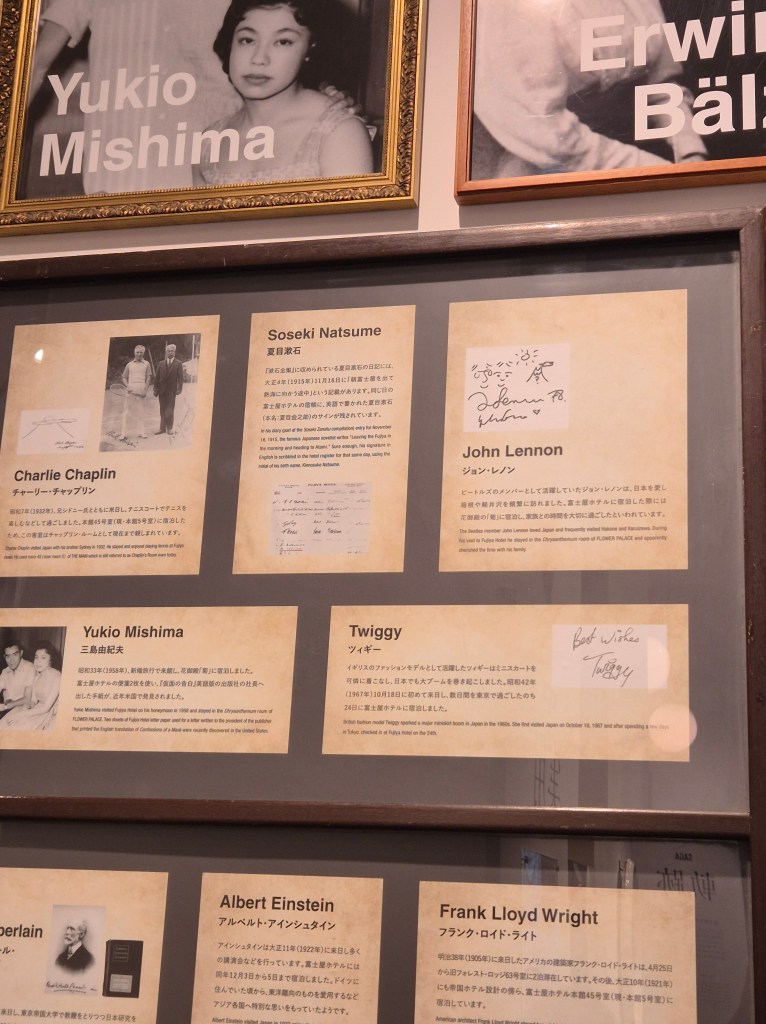
The following day we were tourists, visiting Fujiya Hotel, the first Western hotel in Japan, noting famous people who had stayed there e.g. Charlie Chaplin and John Lennon. It also boasts a moustache museum which, sadly, was closed that day.
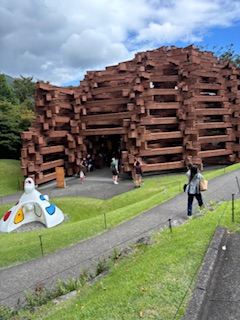
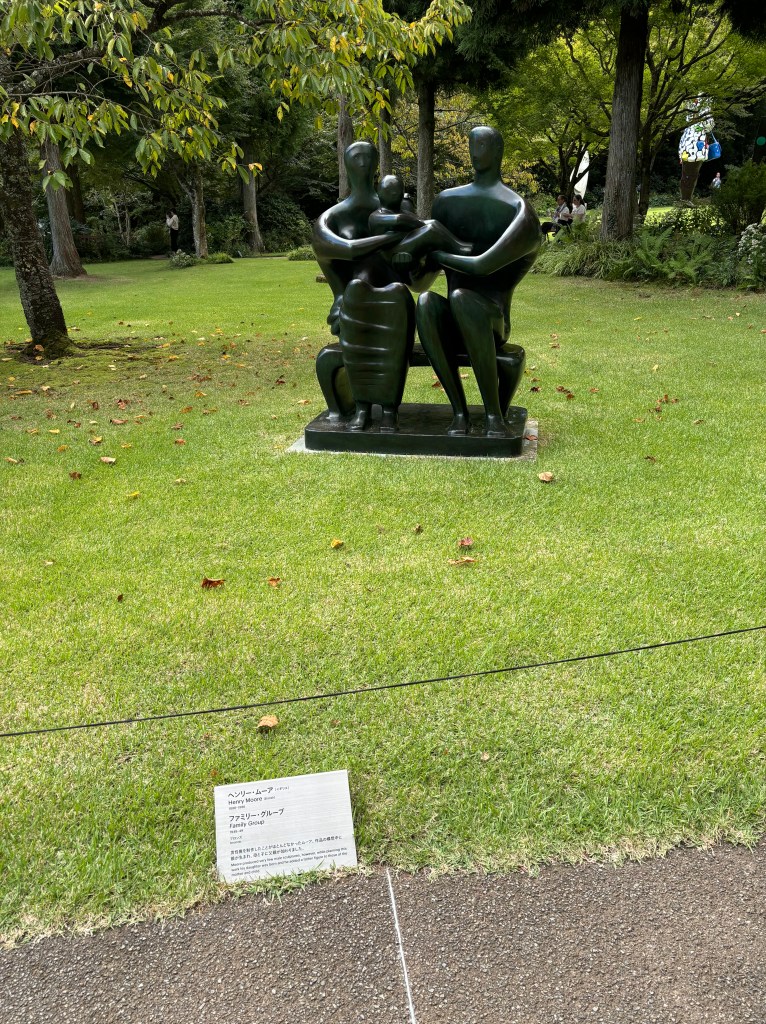
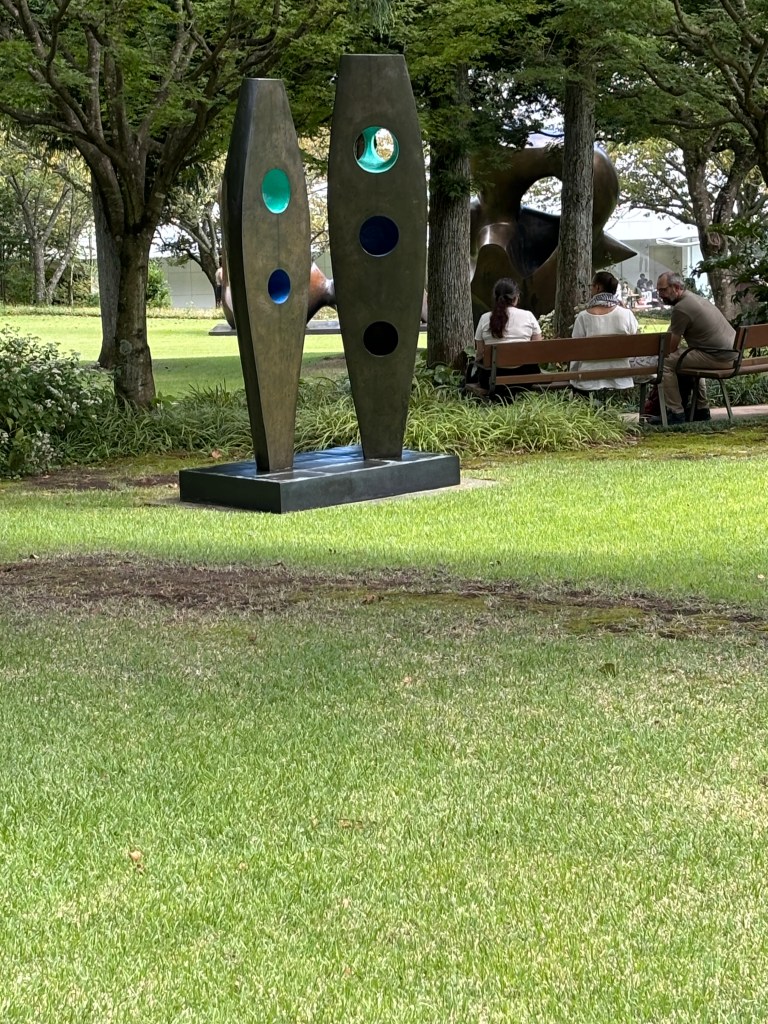
We walked, took a bus and a rope way (cable car) and made the circuit stopping at the Hakone Open Air Museum to look at Henry Moore, Barbara Hepworth, Picasso and a few other famous sculptors.
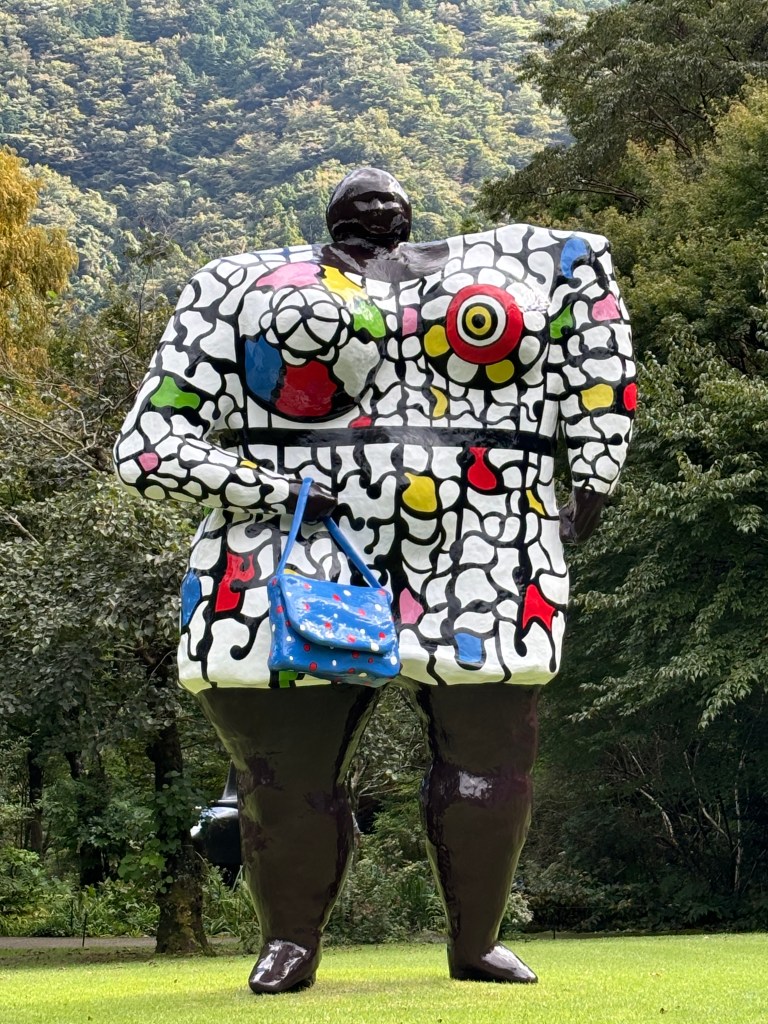
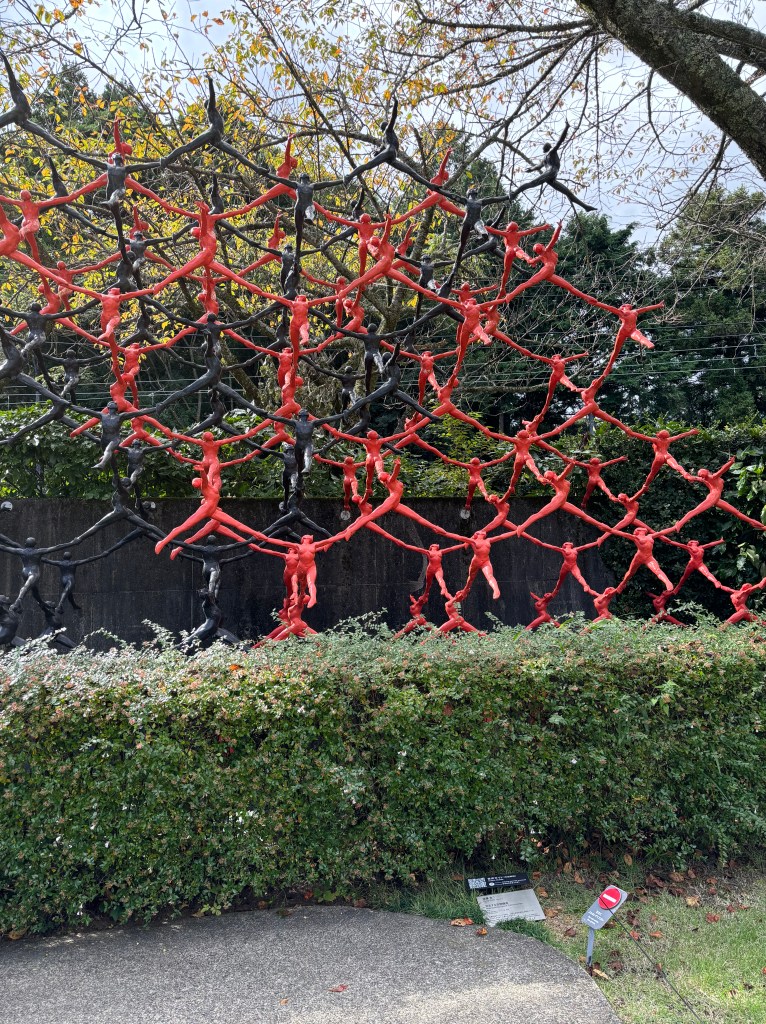
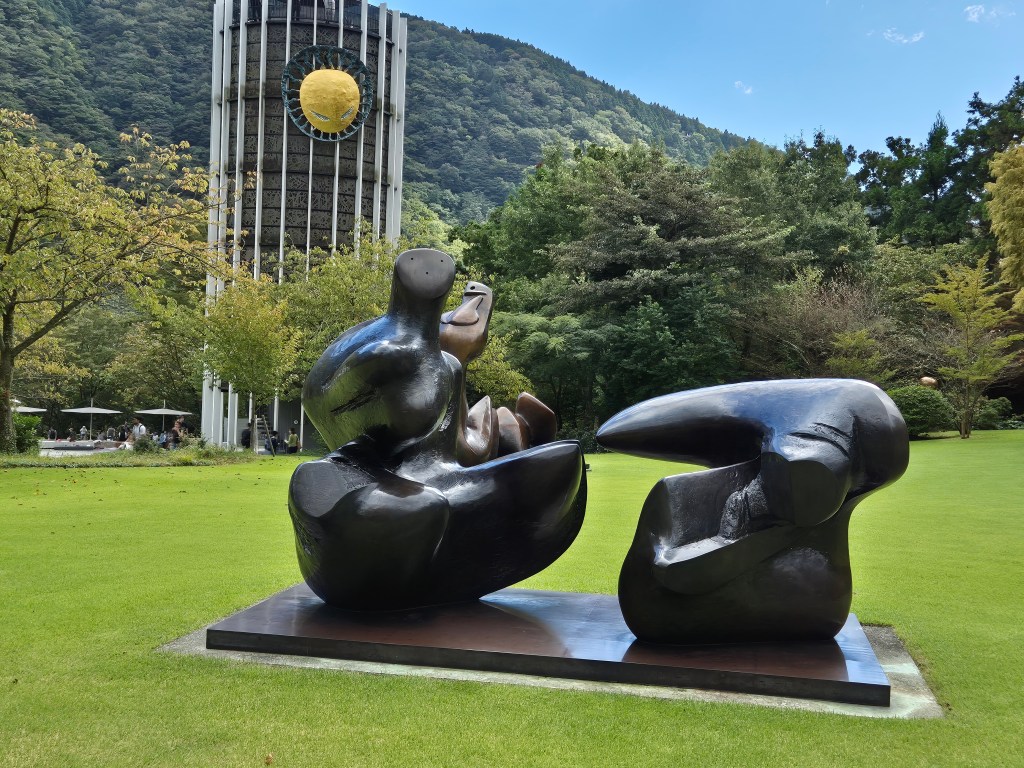
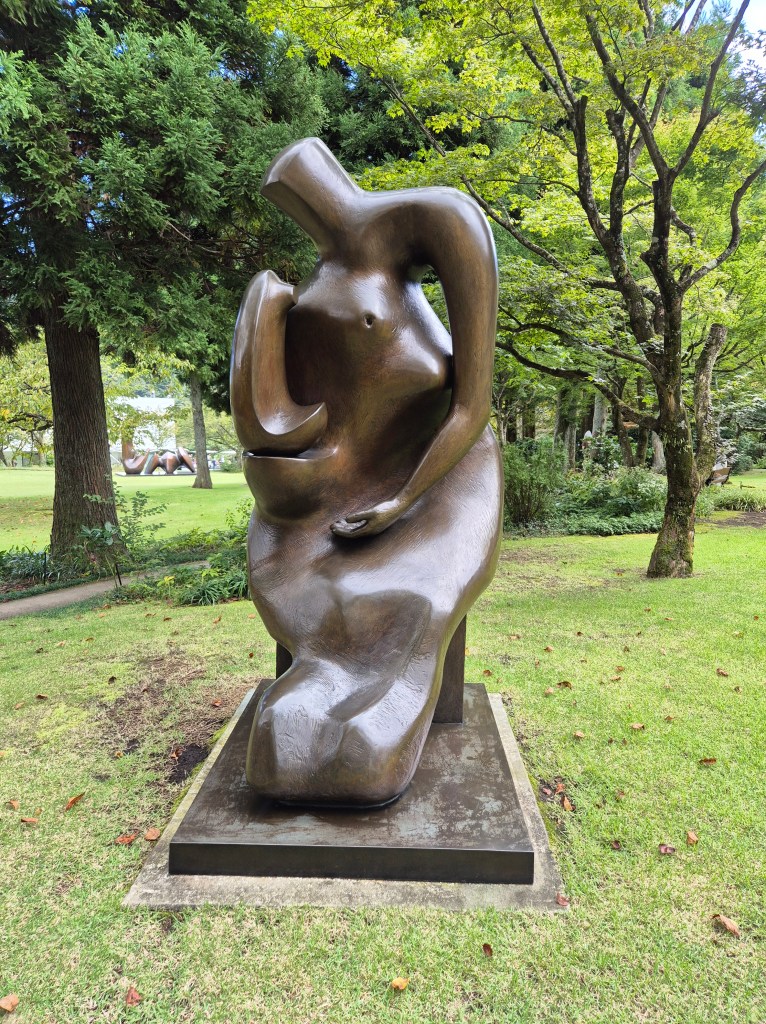

On to a working sulphur mine by cable car where you could buy eggs cooked in the sulphurous waters, we declined!
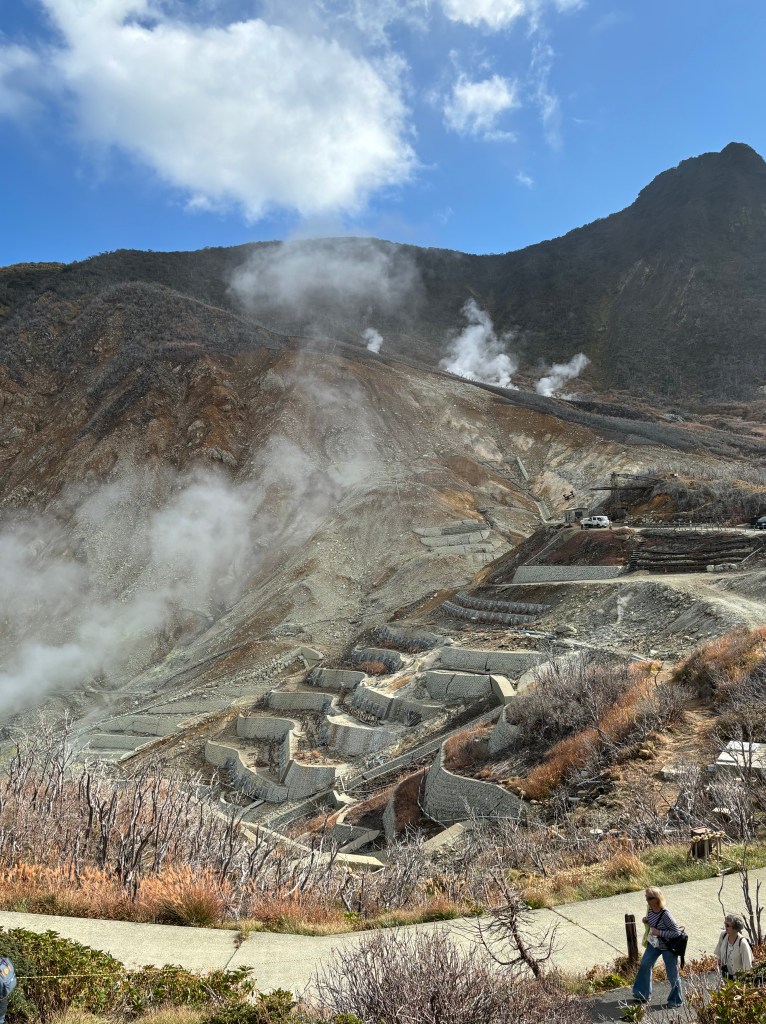
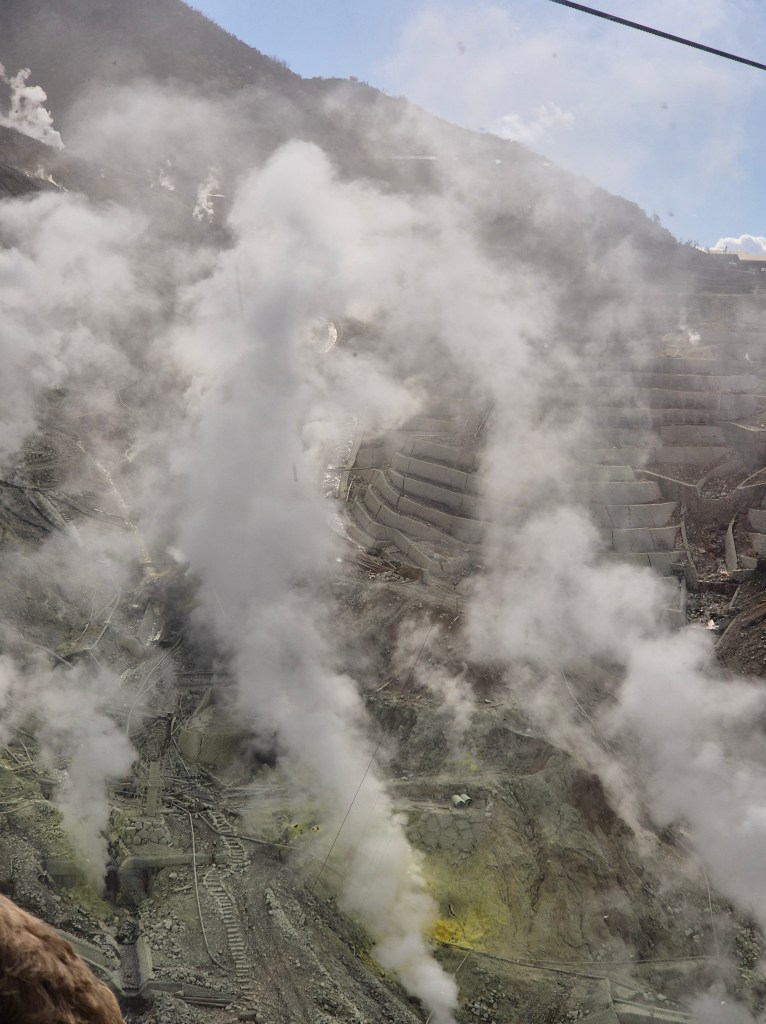
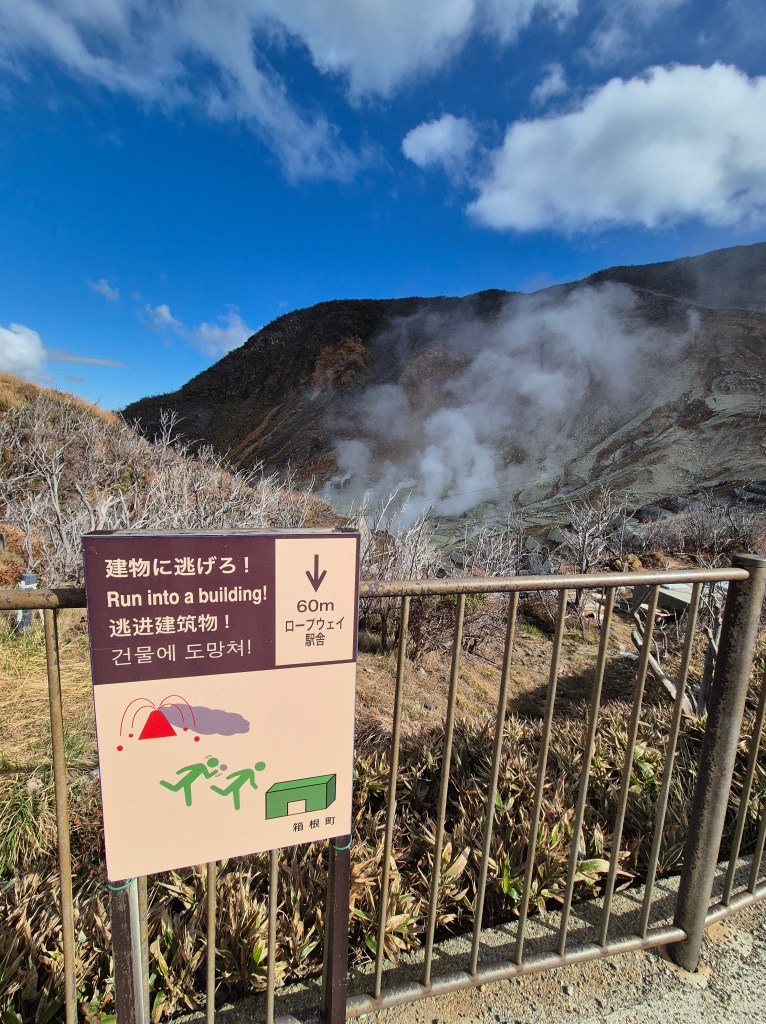
Then back to the hotel by pirate boat (of course).
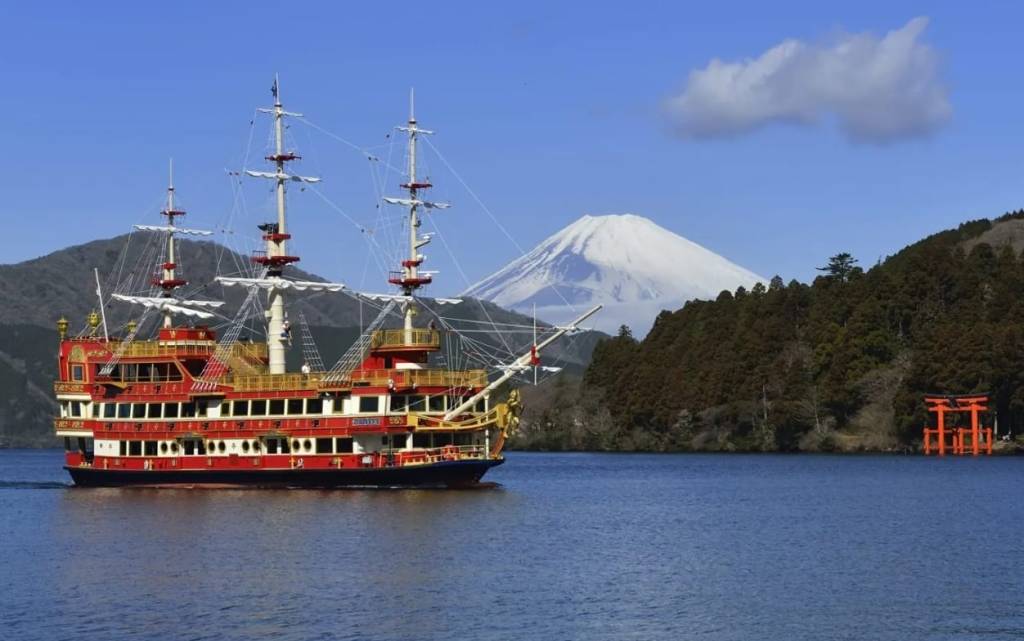
A short walk back to the hotel and we were ready for our second banquet. This time we were treated to Japanese French cuisine.
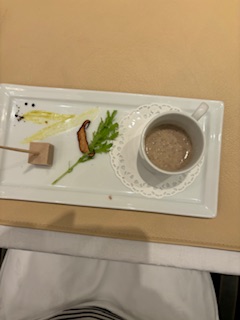
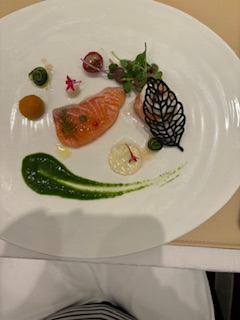
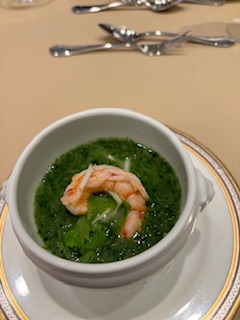
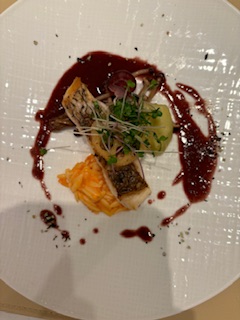
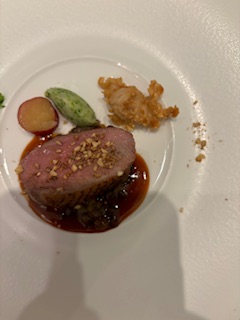
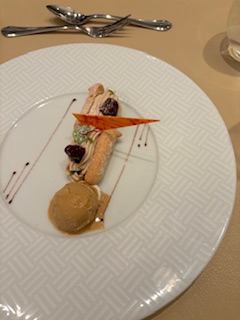
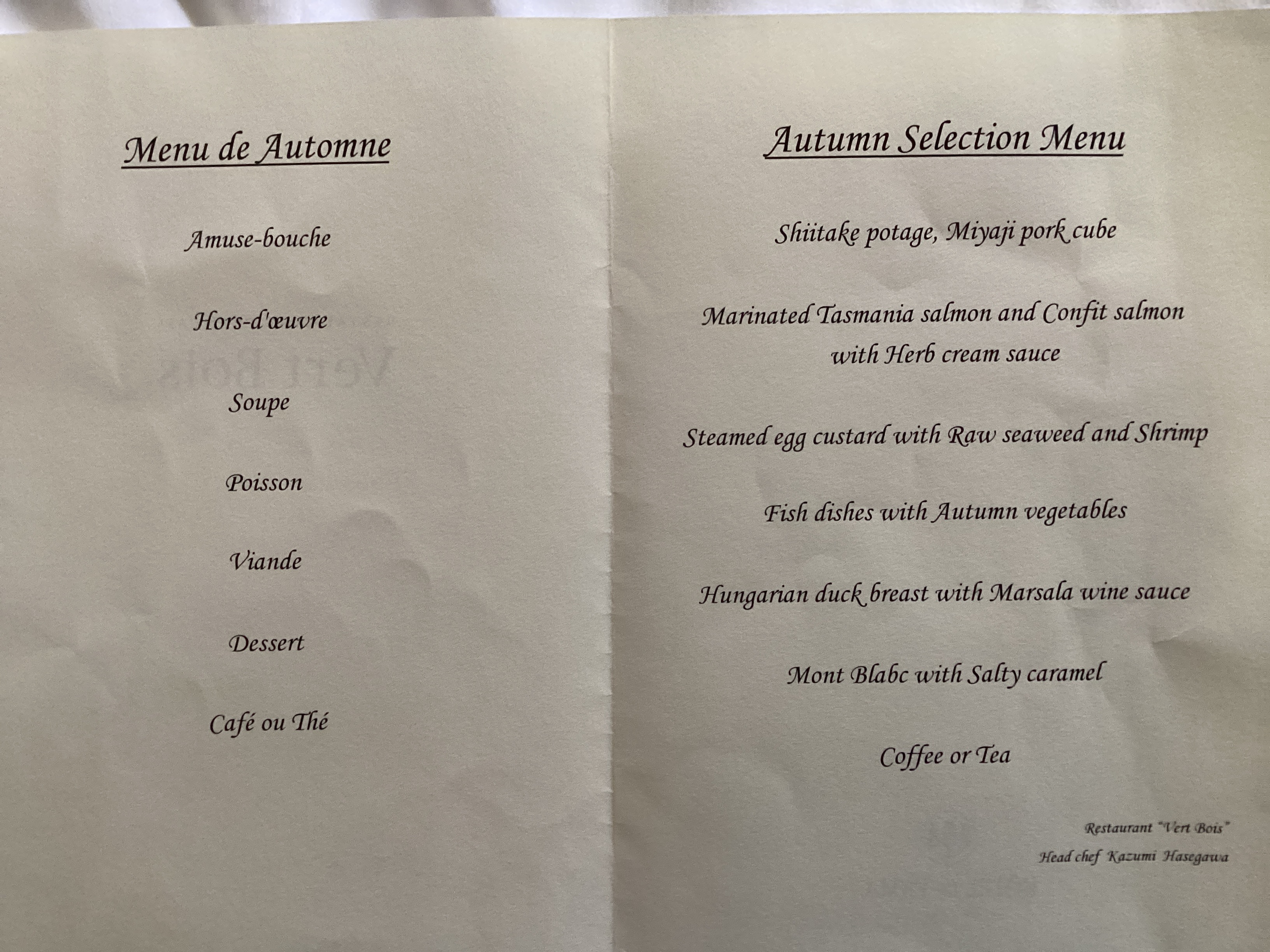
The following day we took a bus to Mishima and then a bullet train to Nagoya, with a final view of Mount Fuji and another train to Kumanoshi.
We were now in rural Japan, staying at the only regional hotel, Hotel Seiryuu-So. More opportunities to use the Onsen, remembering red for women as no English spoken here. The hotel was in the countryside, next to a large river and forested hills.

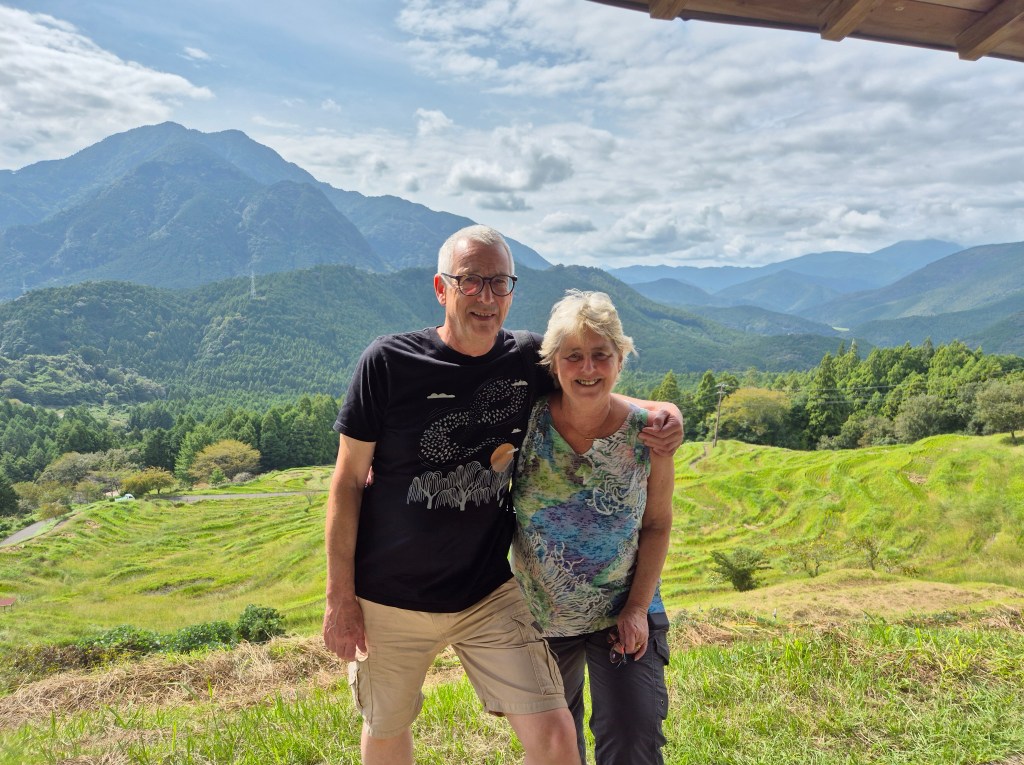
We stayed for 4 nights as this is the area where Keiko comes from and where her amazing journey with FEPOWs began.
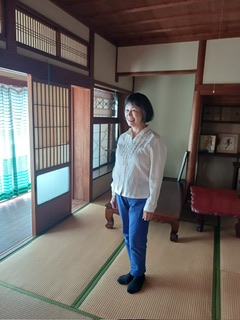
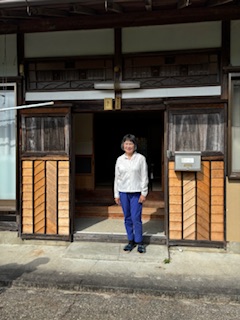
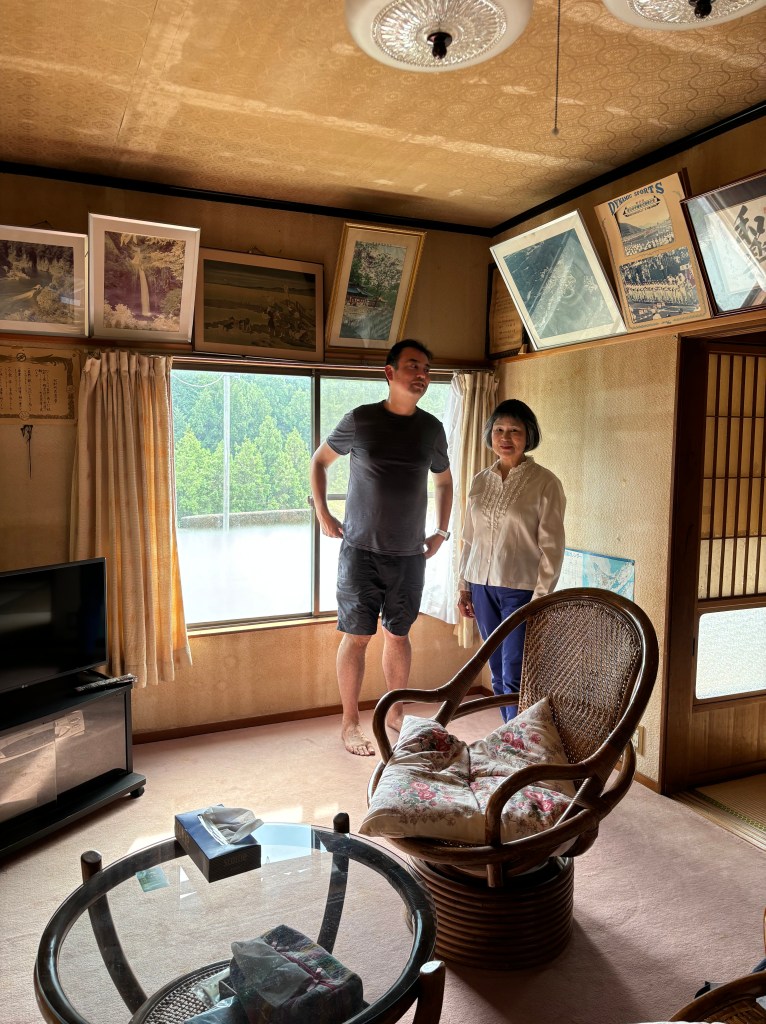
We had a sightseeing trip to Keiko’s family home, and some of the group had stayed there on a previous trip. Even though it was empty, you have to continue with Japanese custom and remove your shoes. A fascinating experience to see how a Japanese house is decorated and used.
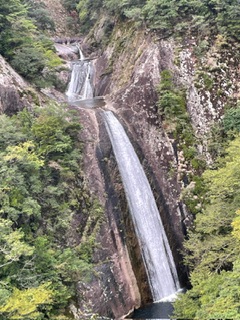
We also visited the local waterfalls, some with hot springs.
The following day, we went to the local elementary school (primary) which has a total of 10 pupils. We were introduced and then spent a delightful hour learning Japanese games and trying Origami to the children’s humour at how bad we were. They sang us a song saying Thank you for coming to visit them and gave us an origami crane to remember them.
In the afternoon we went to the High school with a total of 9 students. We were treated to a spectacular Taiko drumming display and were then asked questions about England e.g. All Japanese have black hair, what colour is British hair, what is the most famous English food, place, ceremony etc. Luckily, Keiko was there to translate our answers. A wonderful day. Plus we ended up in the local paper.
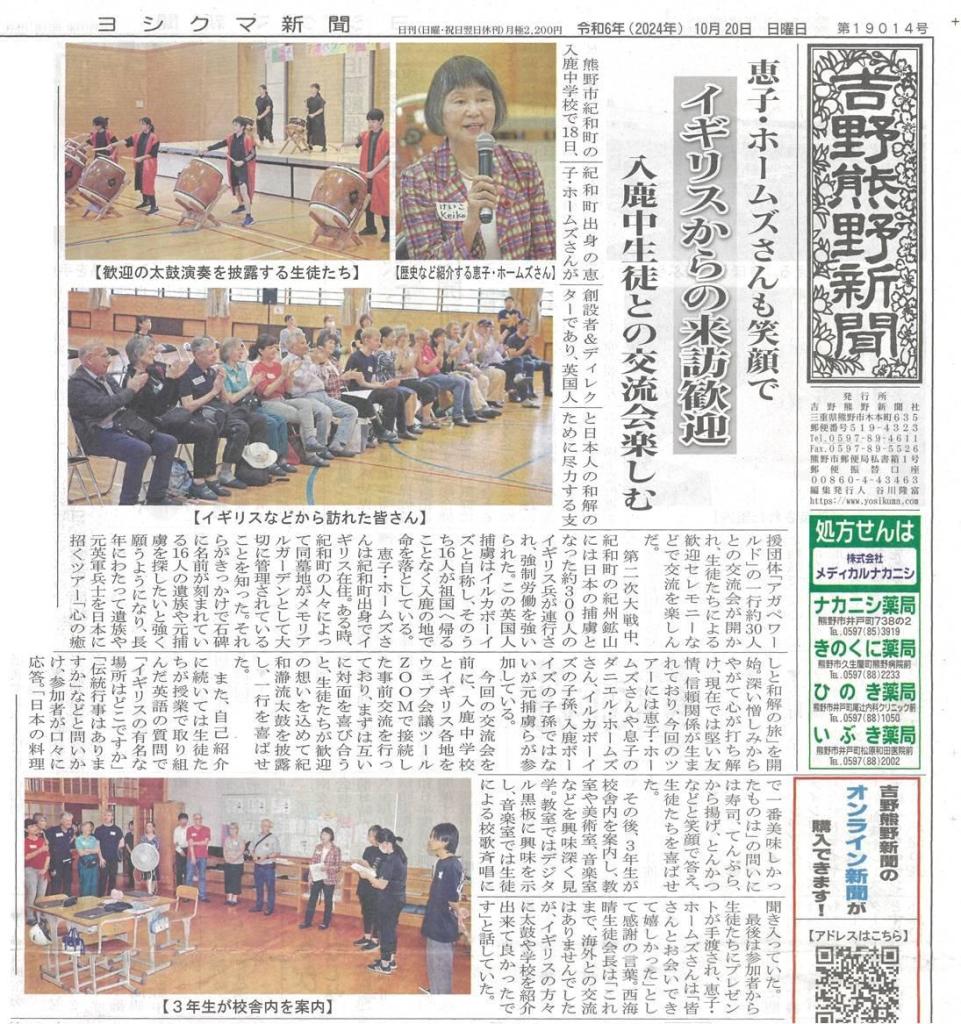
Another spectacular Japanese meal in the evening and then to get ready for tomorrow.
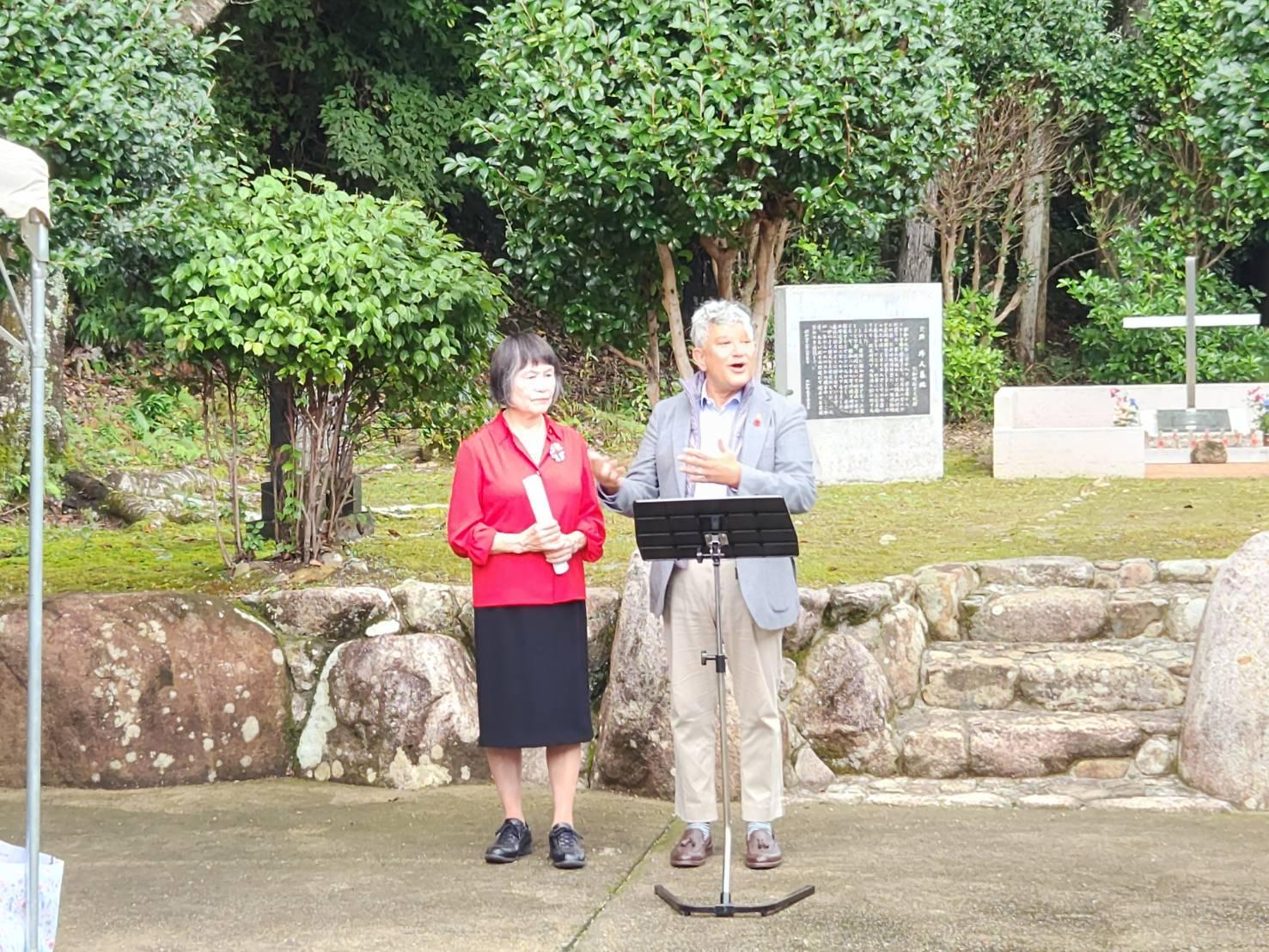
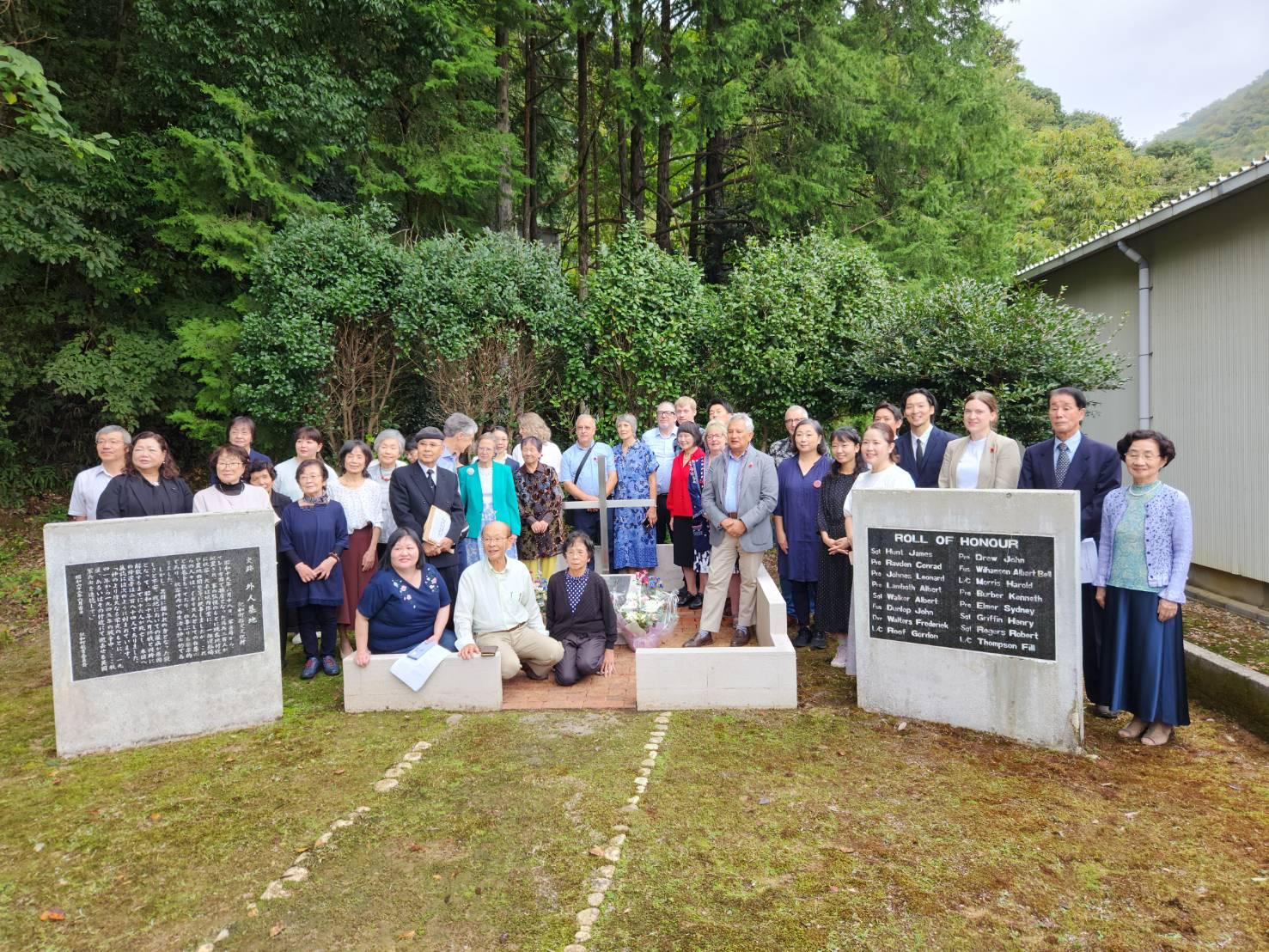
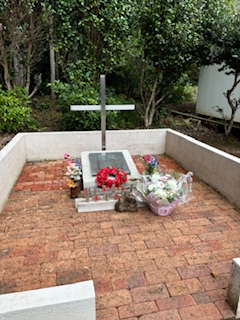
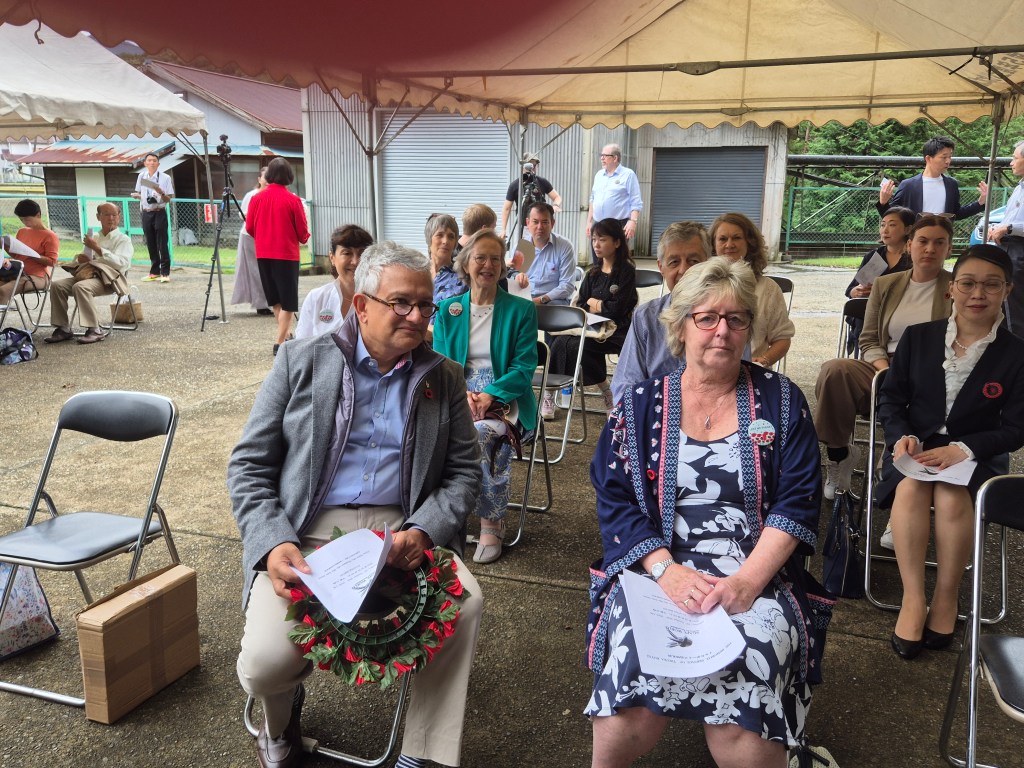
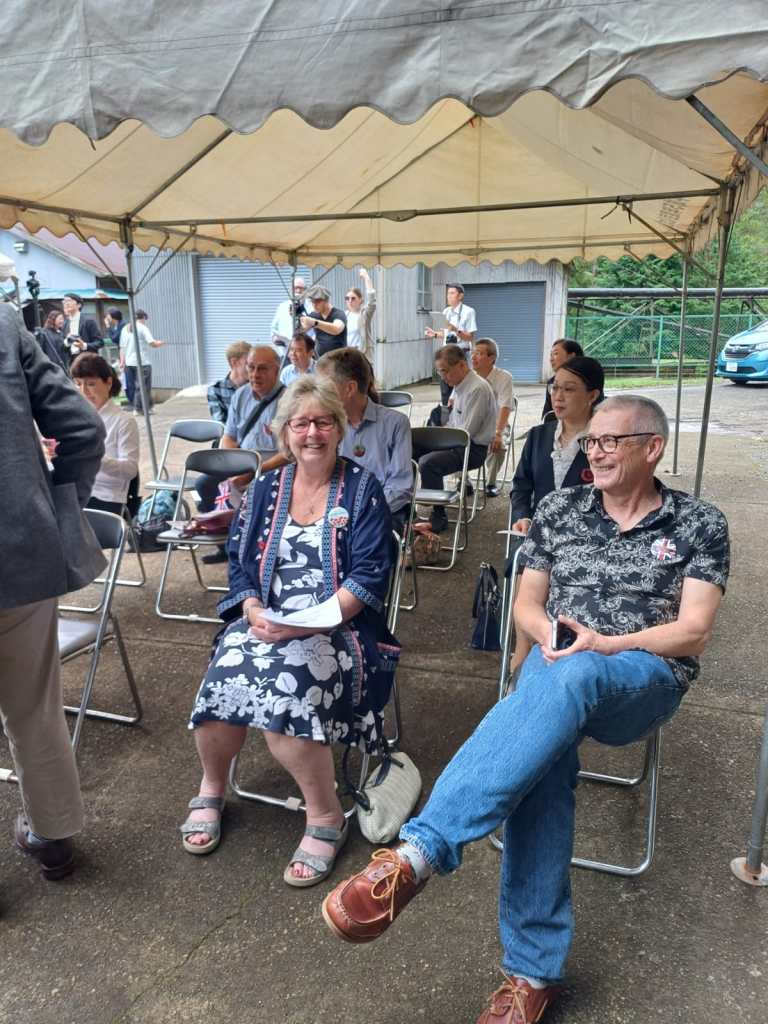
Saturday 19th October was the Service at the Memorial to the 16 Iruka POW’s who had worked as prisoners in the copper mine and had died from illness whilst there. This memorial was where Keiko first discovered that the local people were honouring the dead British POWs and started her on her life’s journey of helping bring about Peace and Reconciliation for other POW’s.
A member of our group was the son of an Iruka boy who survived so it was particularly important for him to be a major part of the service. He told his father’s story and explained his father had not held any malice towards the Japanese. How wonderful that he was also able to meet a local man who was now 86 years old who remembered picking berries and fruit from the forest and giving it to the prisoners. He had photos of the camp which held 300+ prisoners and the local people.
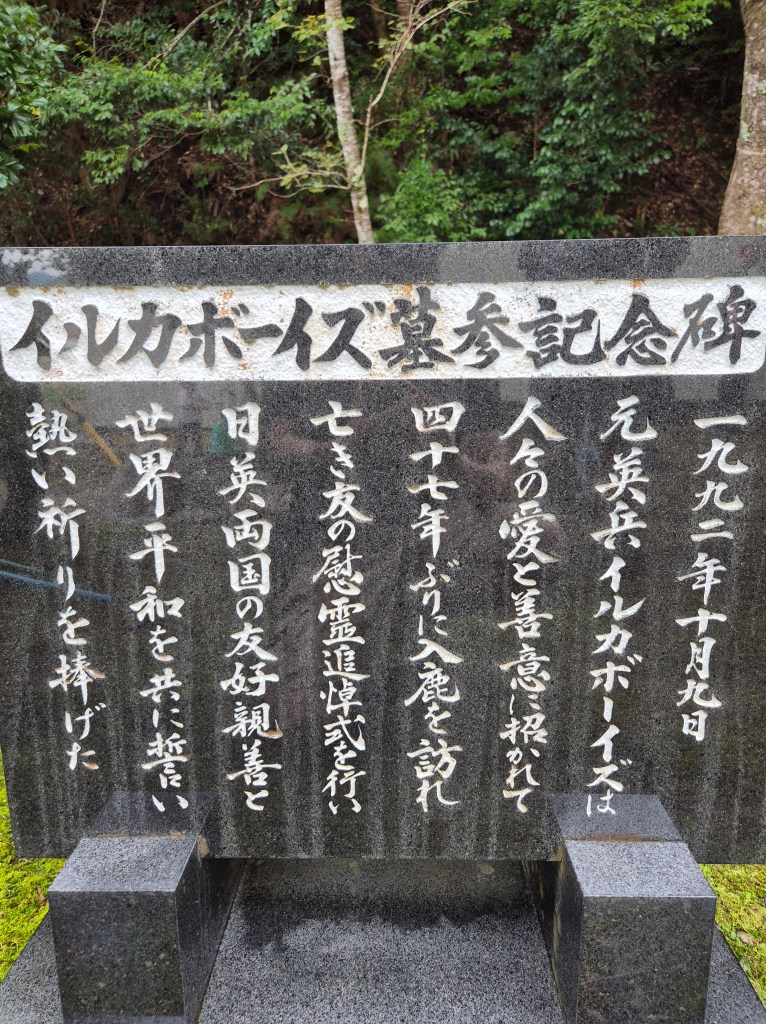
October 9, 1992
The former British soldiers, the Iruka Boys, invited by the love and kindness of the people, visited Iruka for the first time in 47 years, held a memorial service for their fallen friends, and offered a heartfelt prayer, pledging friendship between Japan and the UK and world peace together.
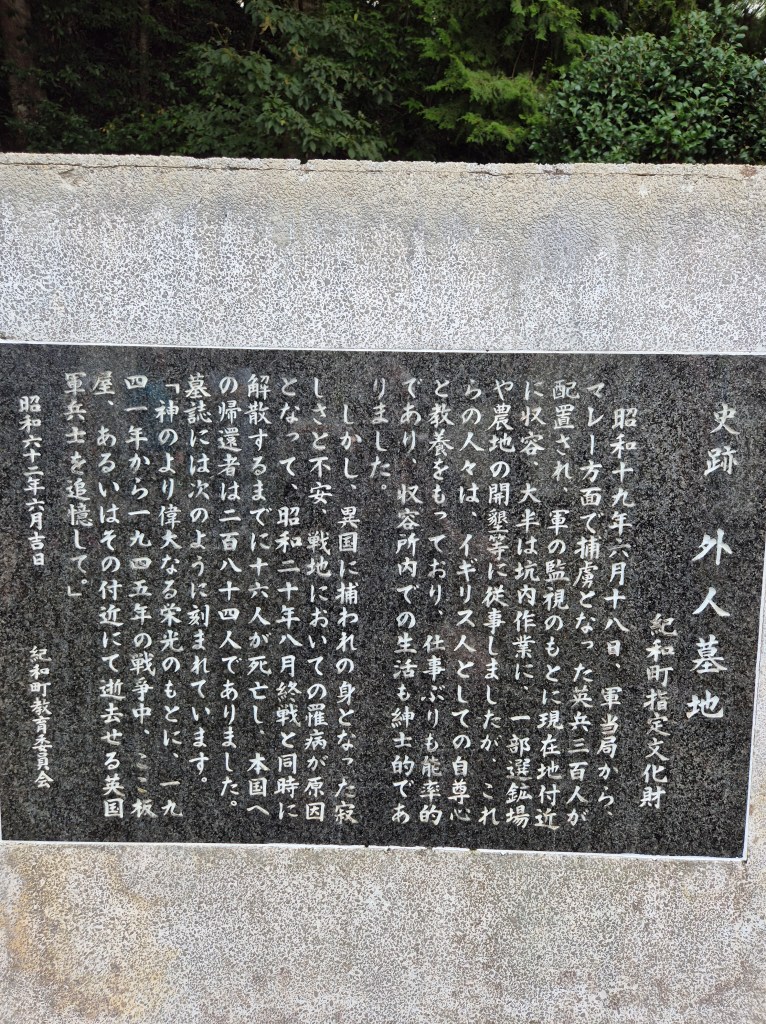
On June 18, 1944, the military authorities announced that 300 British soldiers who had been captured in the Malaya area
had been stationed near the current location under military supervision. Most of them worked underground, some in ore dressing plants and on farmland reclamation. These men had a sense of pride and culture as British people, worked efficiently, and lived gentlemanly lives in the camp.
However, due to the loneliness and anxiety of being held captive in a foreign country and illnesses on the battlefield, 16 men died by the time the camp was disbanded at the end of the war in August 1945, and only 284 returned to their home country. The following is inscribed on the tombstone: “In the greater glory of God, in memory of the British soldiers who died here at Itaya or nearby during the war of 1941-1945, June 1987, Kiwa Town Board of Education
It was surprising how many local people attended, mainly the elderly. Everyone was welcoming and pleased we had come.
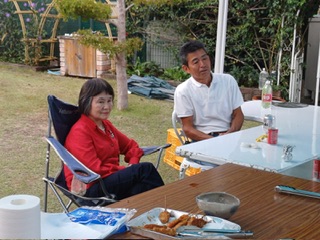
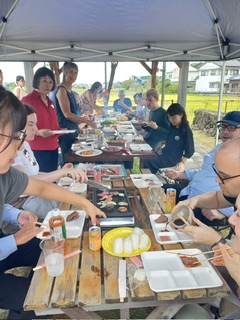
Later in the afternoon we were treated to a BBQ at Keiko’ s brother’s home. What a feast, with wild boar hunted locally, freshly caught tuna and numerous other meats, fish, salads and BBQ vegetables.
Back to the hotel and yet more food which was very difficult to cope with! It was the last night we would all be together as Andy and I were leaving the group for a few days.
It had been a wonderful experience made very special by the members of the group. Hearing their stories, we all had a common interest and differing journeys to fulfill our personal needs.

 Our Travels 2024 - 2025
Leave a reply to Silvia Ardizzone Cancel reply