Weather issues have been instrumental in a couple of changes to our route and may yet play more of a role as we head west towards Singapore.
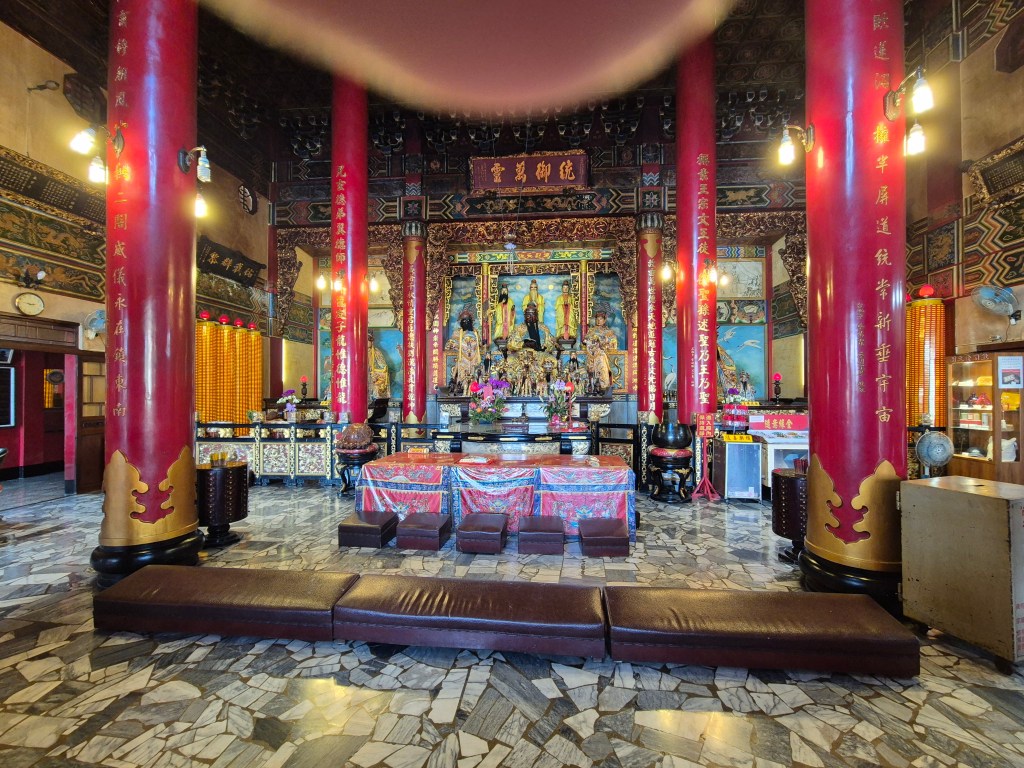
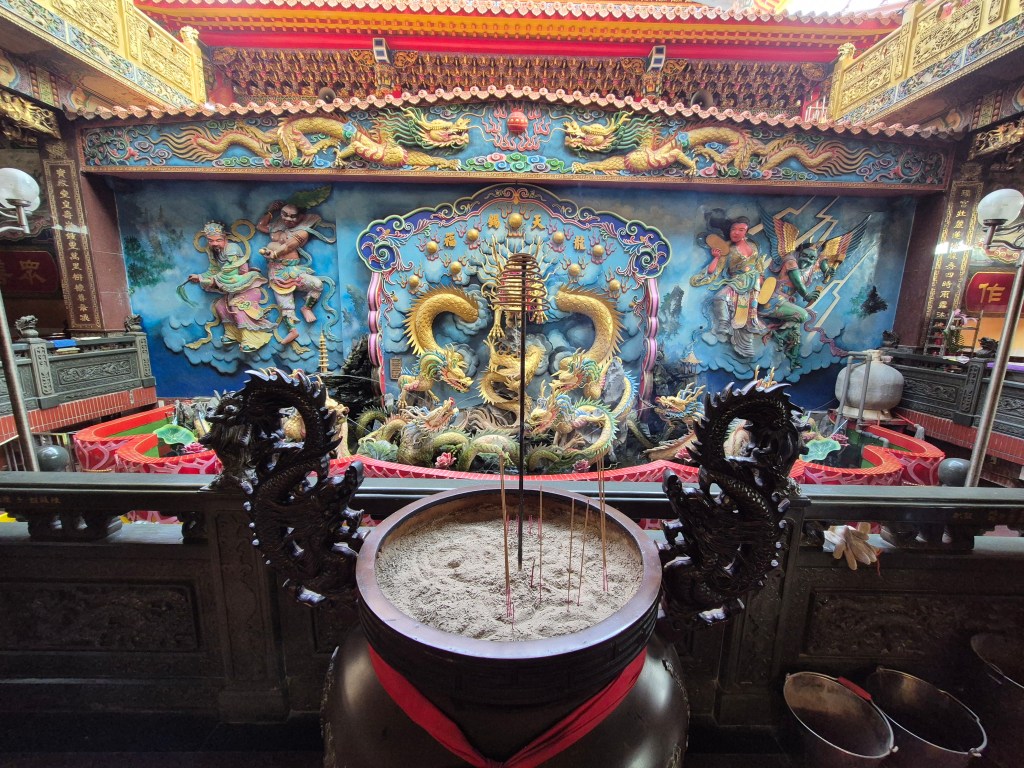
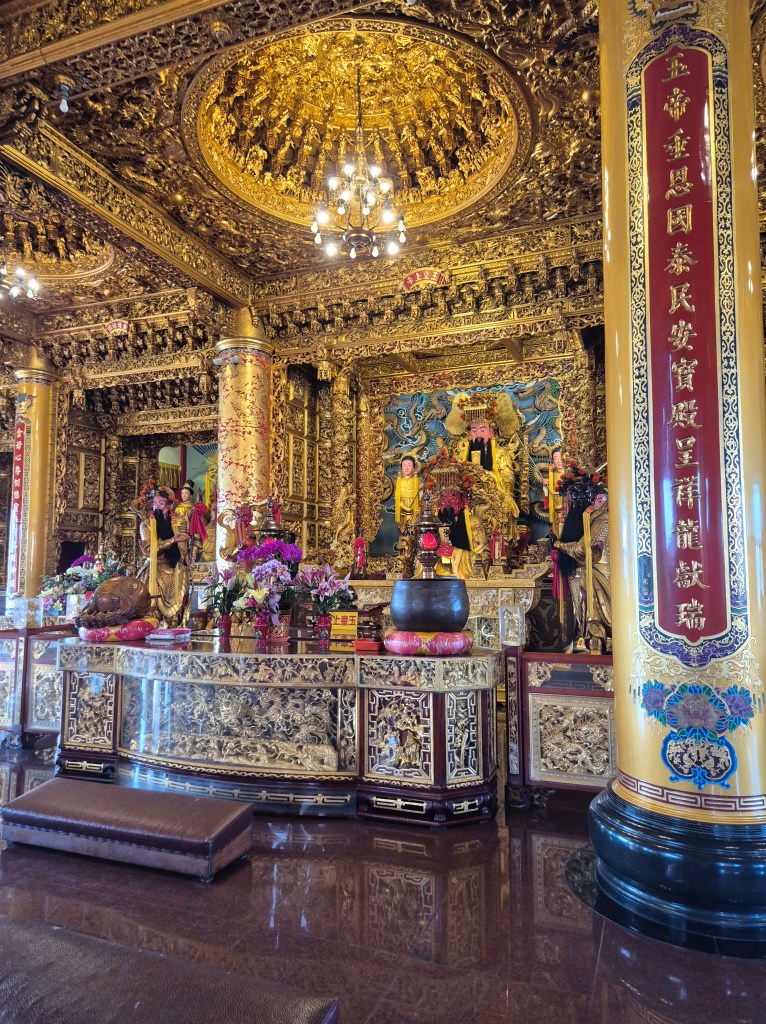
Our first unanticipated stop was in Kaohsiung in Taiwan, a surprisingly sunny part of the world with 300 days of sunshine a year. We took an Oceania tour around the town to see a few of the religious and other cultural highlights.
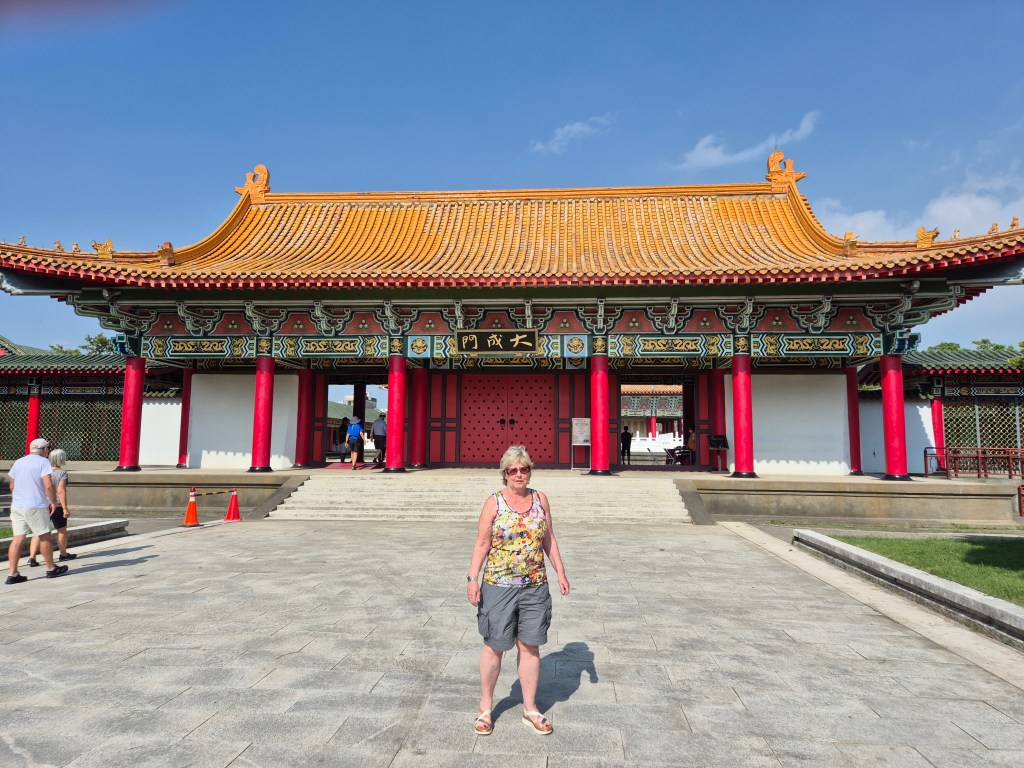
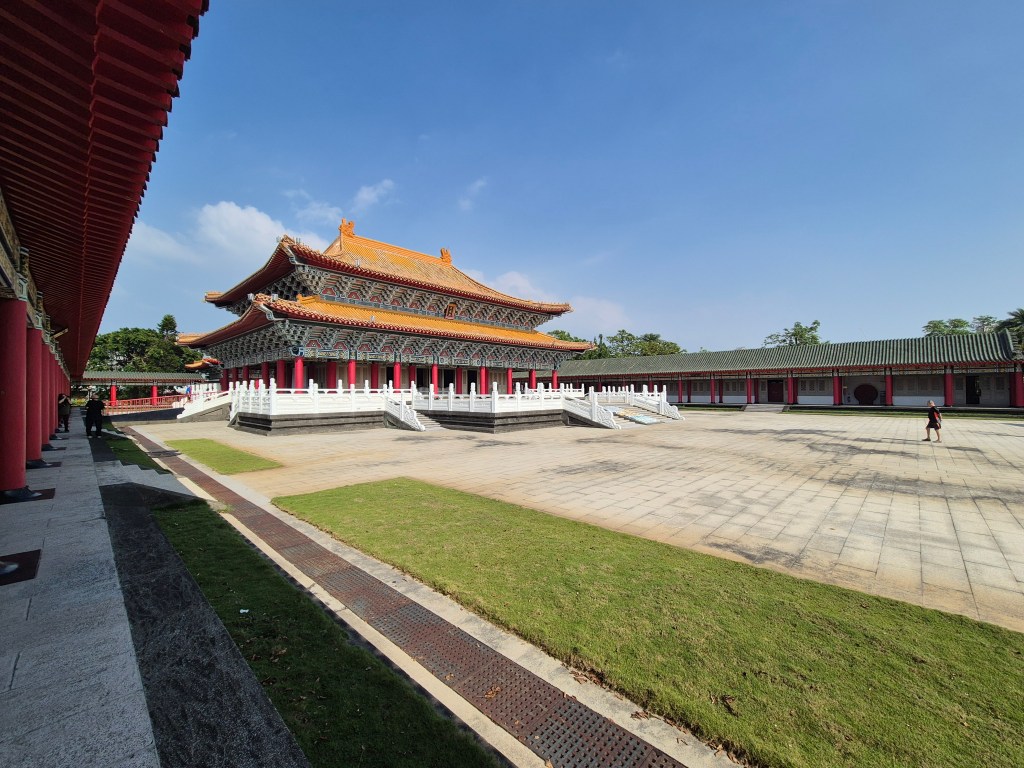
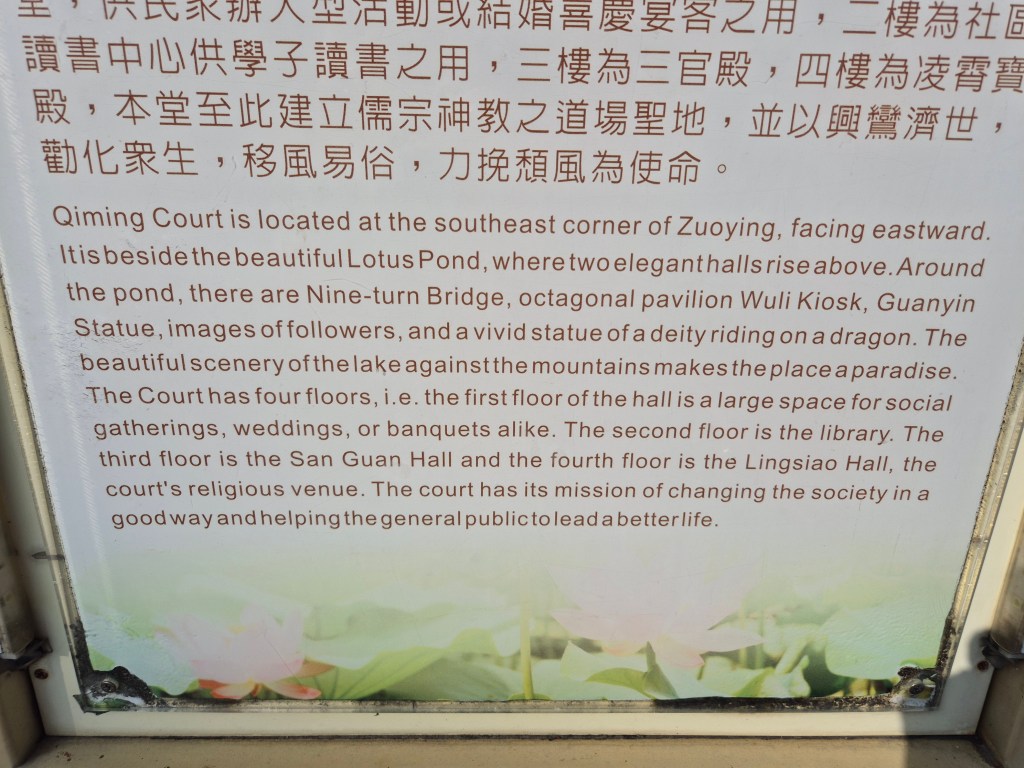
Firstly, the Confucius temple which is a huge structure.
Then the Spring and Autumn Pavilion
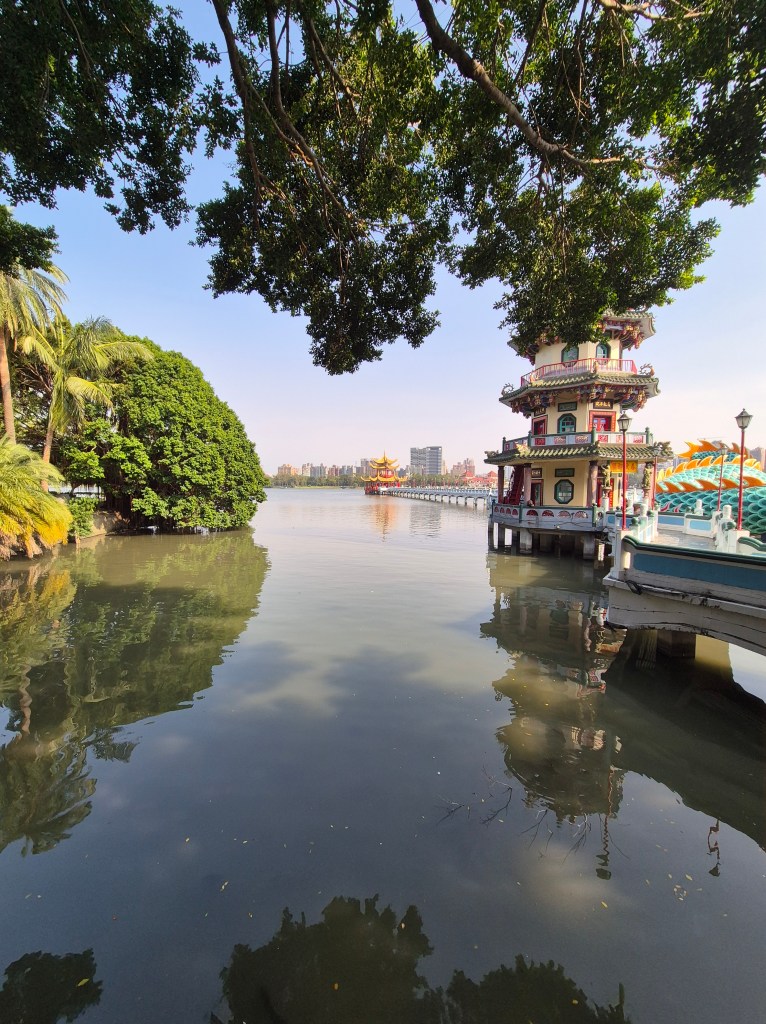
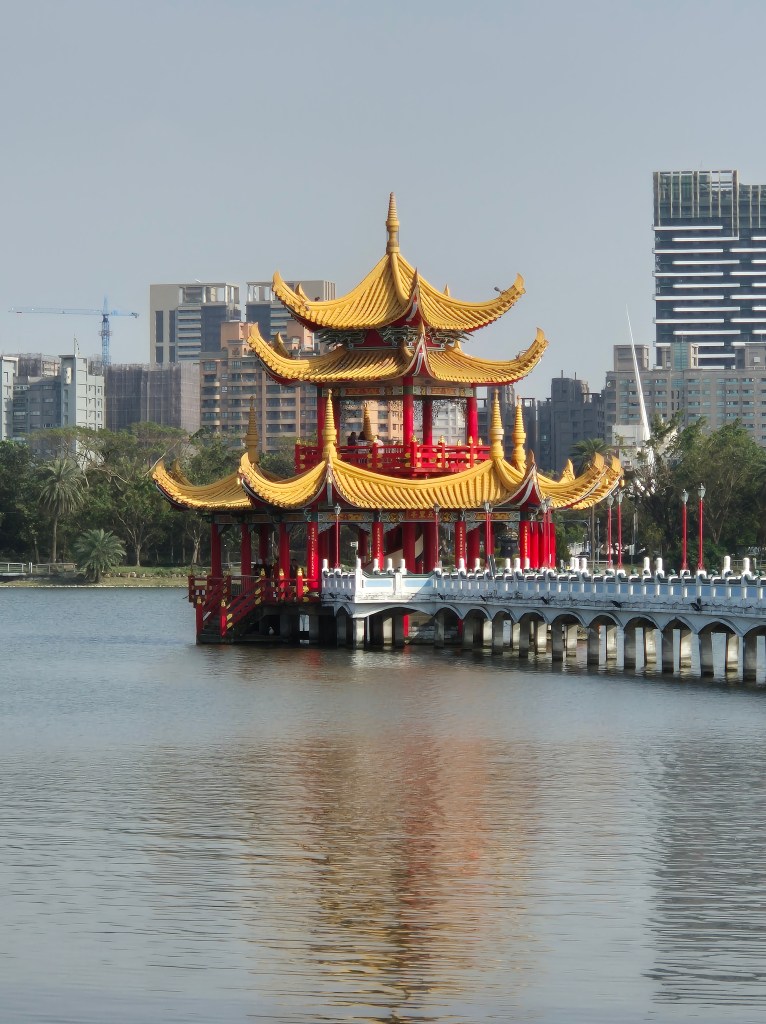
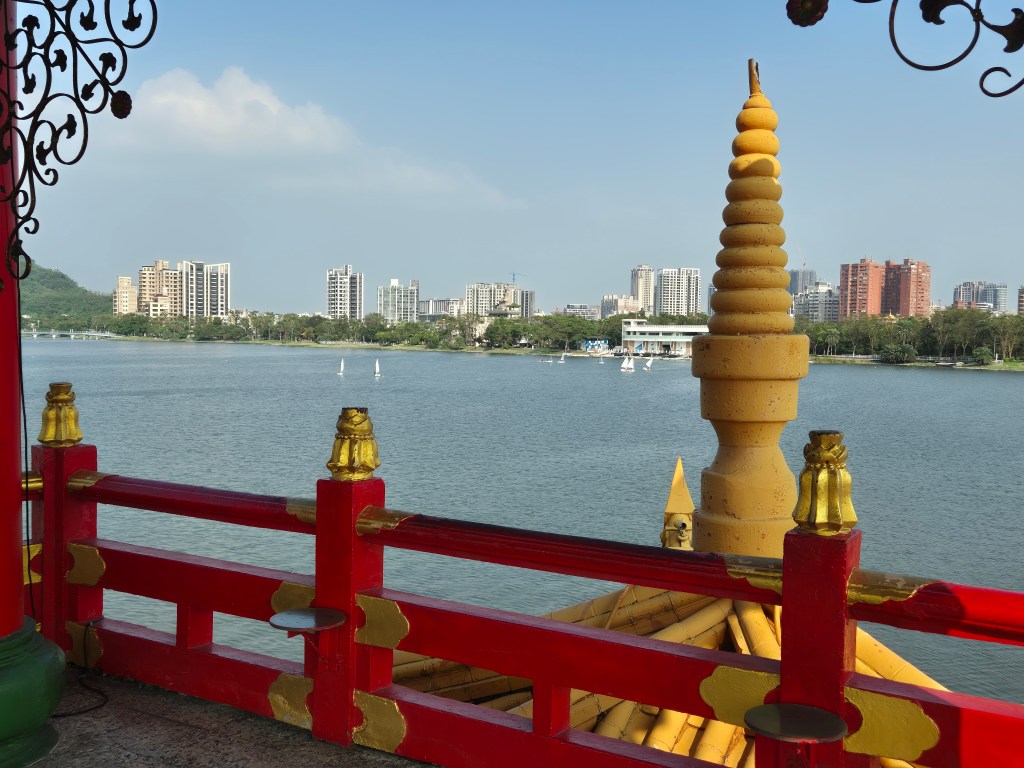
And the various floors of Quiming Court


That night we mastered yet another city’s rail/metro/tram network (it’s all the same to us) and found ourselves at one of the several night markets in the town. These are great for tofu eaters and afficionados of pig intestine soup but the smell of the former and thought of the latter led us to somewhat less extreme food options. However they are fantastic places, buzzing with people, noise and scooters everywhere. Eating out is a way of life here, according to our guide earlier in the day. People occasionally cook but most often meet up to take in some street food or a restaurant and that means the street places are always busy. This always works better when the temperatures are so conducive to being outside…

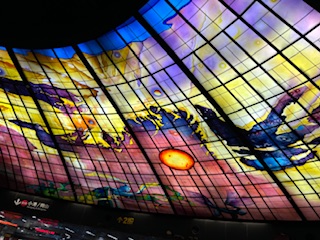
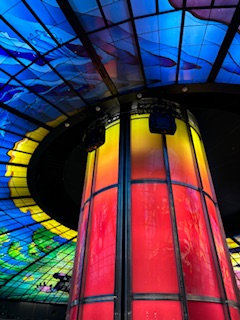
We also visited Formosa Boulevard train station which has the largest stained glass ceiling in the world and offered light and story shows concentrating on children’s cartoon characters.
A day’s sailing away lies Hong Kong, a place we last visited when it was still under British rule back in 1995. We weren’t taken with it then, so our expectations weren’t so high but how wrong can one be? Hong Kong now is a place that everyone should see once; it combines stunning modern architecture with high rise living so everywhere the horizon is dominated by high rise blocks. This is probably best seen at night, as we were departing.
One of the best ways to avoid being irritated by tour guides yet see the city is by taking the open-top hop-on hop-off bus, of which there are 3 routes, ranging from 1-2 hours duration but which run every 45 minutes or so so you can get off, look around, get on again and go somewhere else. They provide headphones with a commentary in English but this is obviously optional. We initially took the green route as this goes right round Hong Kong island and we saw some spectacularly beautiful scenery, ranging from the mountains cloaked in forest to reservoirs set in unspoilt valleys. Apparently 75% of the island is not built-up and is highly valued for recreational activities ranging from the high end horse racing to hiking and sailing. We missed the one stop we thought would be interesting, a beach with a selection of restaurants but got off at the next place, a storm shelter where the harbour provides shelter to fishermen when the weather turns violent. These shelters (we’d call them a harbour) are also used by people who own house boats, and we had the opportunity to take a trip through the harbour and see one of these. All around the harbour are the high rise apartments that city workers live in and yet in the water are people’s floating houses, some of which look very old.


Returning to the centre we took the ferry across the water to Kowloon where the blue line runs. This is a fascinating area, with shops grouped in terms of what they sell. So, we walked through the kitchen supply area with every shop selling a huge variety of commercial kitchen equipment, then the fruit market, then the Ladies market and Jade market and even, when we went into an ultra modern shopping mall, in one section all the shops were selling high end clothing for kids. Some of these shops are just a counter on the side of the road, others are all polished chrome, it is a truly fascinating place.
We’re back in 2025 for an overnight stay, so more then.

Good morning Vietnam, our next stop, a 2 day stopover with 2 trips booked. Despite the hugely complex and interesting history of the country, the one thing that we find more fascinating than anything else is the traffic, or rather the composition of the traffic. Being driven through Saigon (now named Ho Chi Minh City) is an experience of its own as 90% of the traffic consists of swarms of people on scooters, some on their own, some riding pillion and some transporting goods or pets from one place to another.
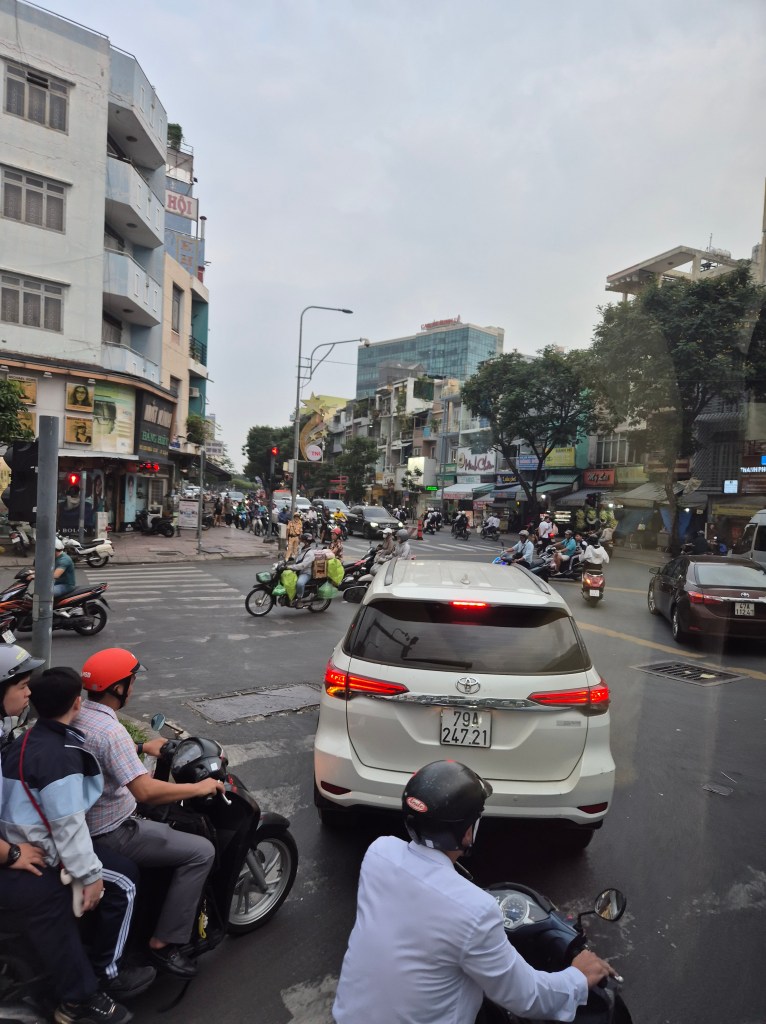
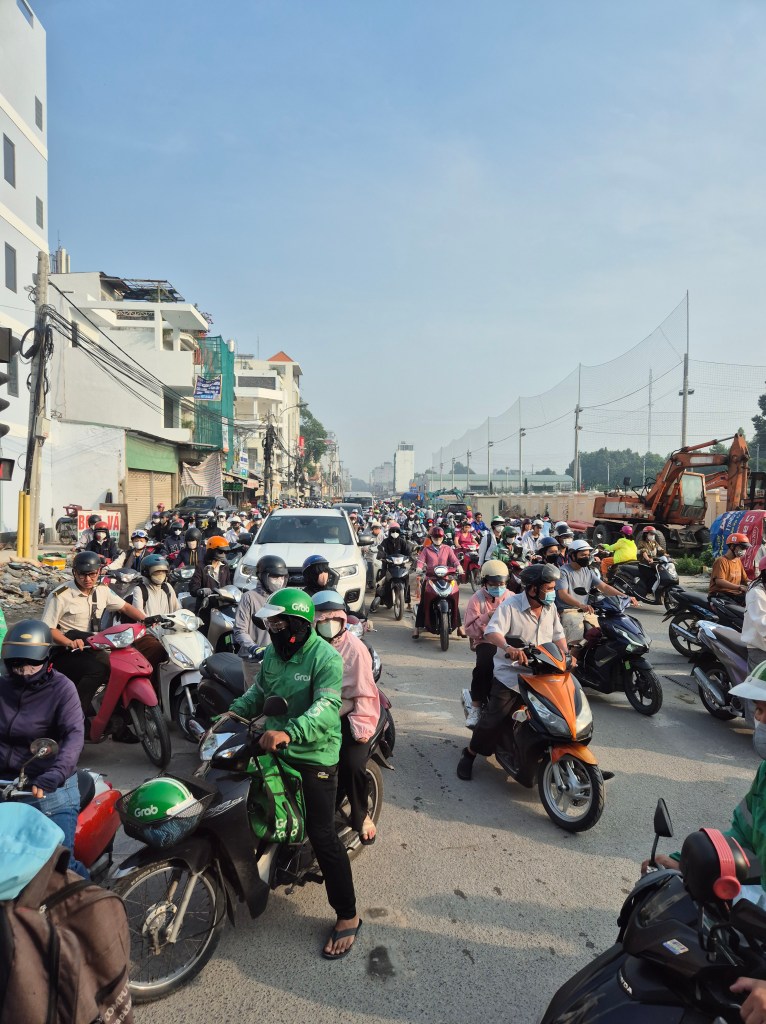
Many of the riders also choose to wear masks and scarves which completely cover their faces: this isn’t as a counter to air pollution or because the air is a bit chilly. This is particularly common in female riders whose desire is to have a white skin, a feature greatly valued by Vietnamese culture.
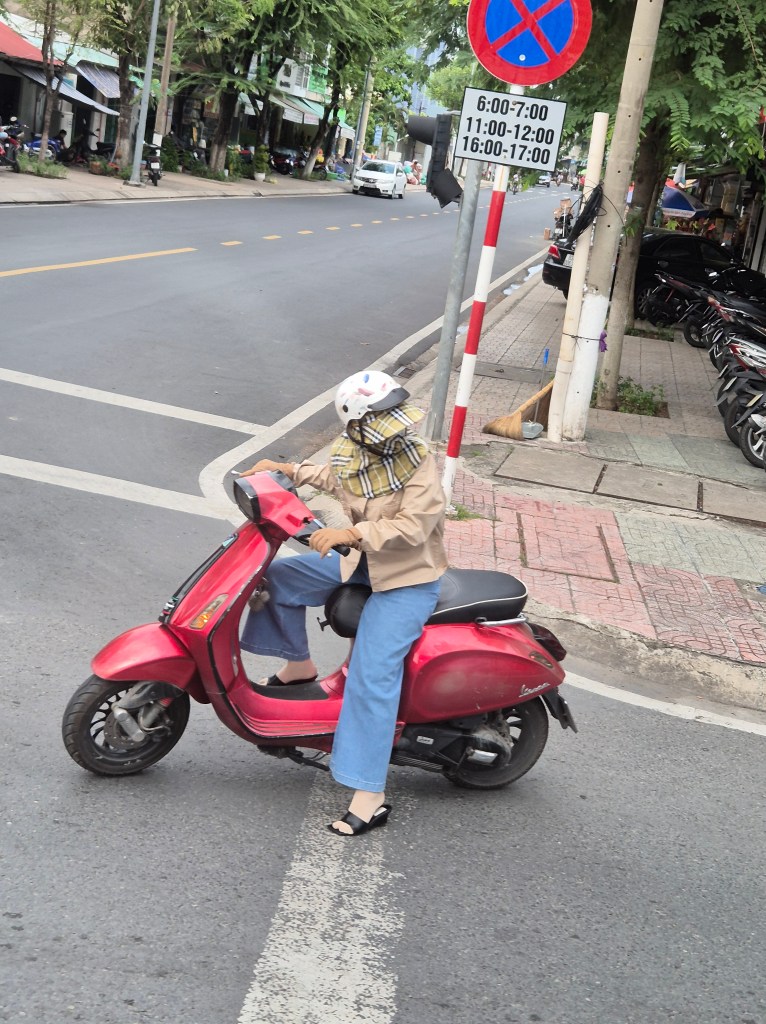
Vietnam is undergoing an economic growth spurt and the consequence of this is that for the hundreds of thousands or even millions of workers that need to get to work going by scooter is much cheaper and quicker than by car. Parking our ship in central Saigon meant that any trip out of the city required at least a 3 hour round trip.
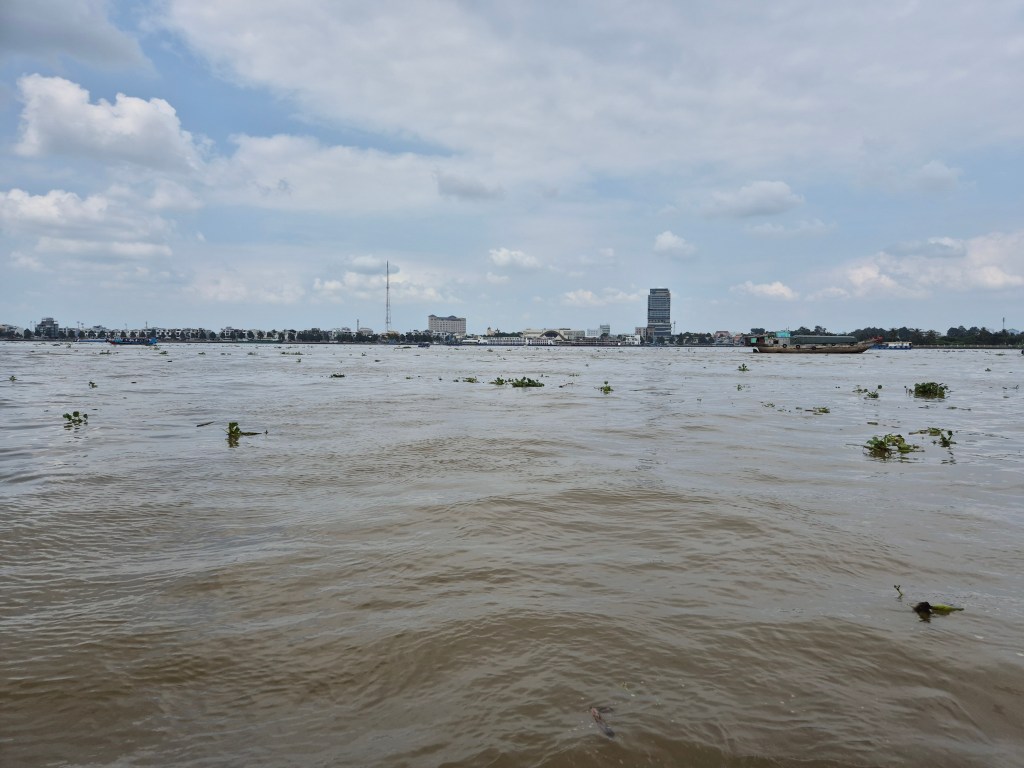
Day 1 was a trip to the Mekong River Delta, a name which is familiar to anyone who grew up during the Vietnam war and one which evokes such mystery and interest. Sadly this trip did neither, as our only delta experience was to board an old boat and be taken to a series of islands in the centre of the river. The guides explained the importance of the river, being close to both the Cambodian border and the open sea and how the communities support and are supported by the fishermen.
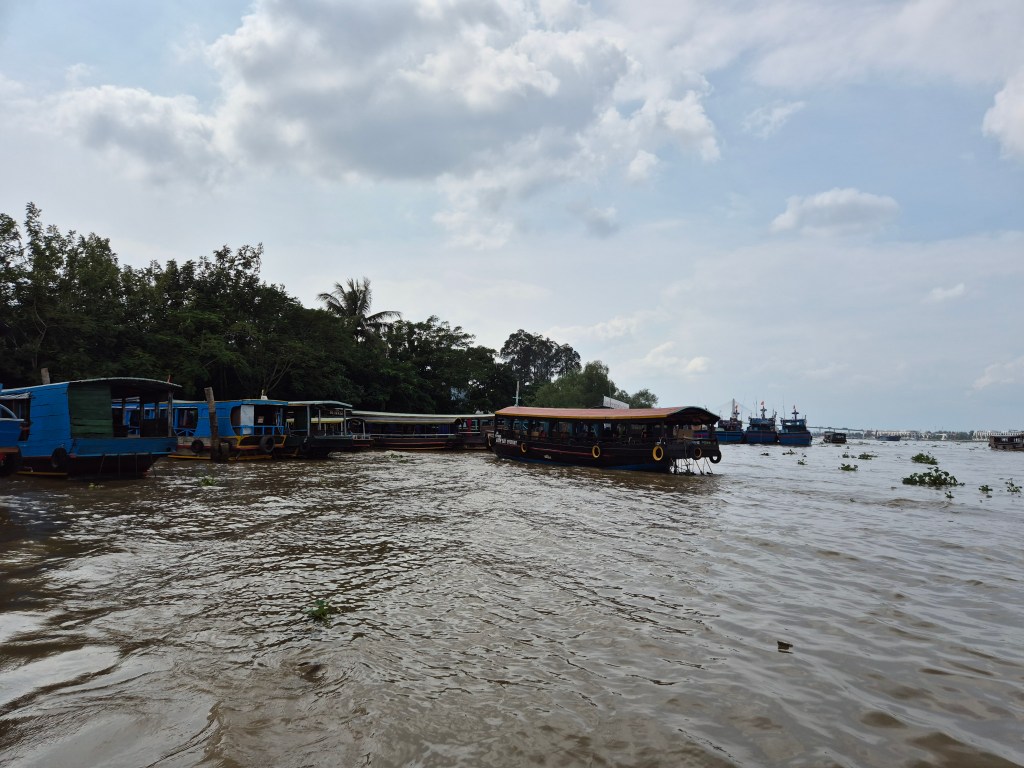
Our guide made a point of describing how the Vietnamese differ from the Chinese in that the latter are always after your money whereas the former simply want to welcome tourists to their country. We were then taken to island 1, where we could taste some banana and ginger based snacks and drink honey tea, hold a honeycomb and then be invited to buy big bags of all those things. Then we were able to hold a python, walk to another tent and listen to music, accompanied by plates of fruit, admittedly very nice when dipped in chilli, before being asked for tips. Then lunch, where they finally excelled themselves.
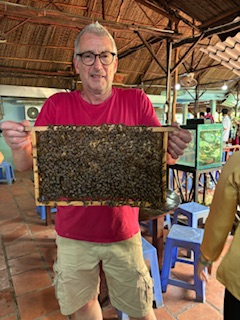
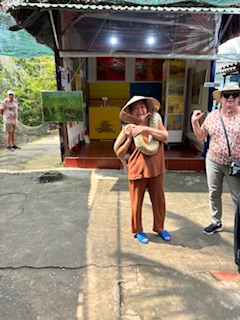
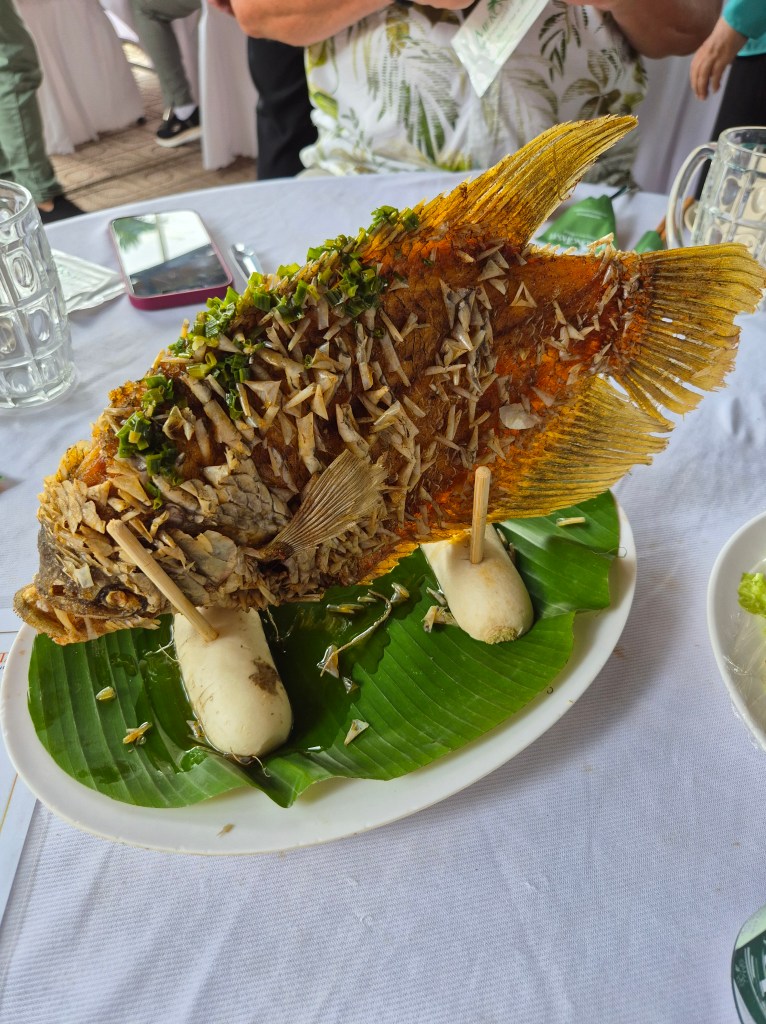
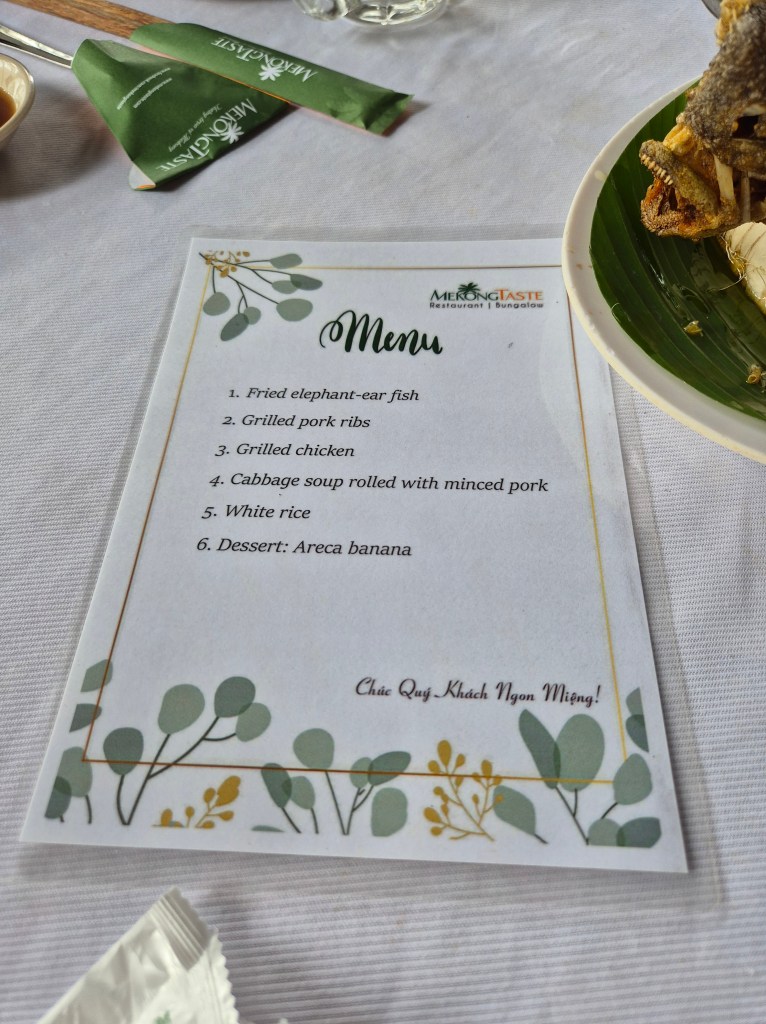
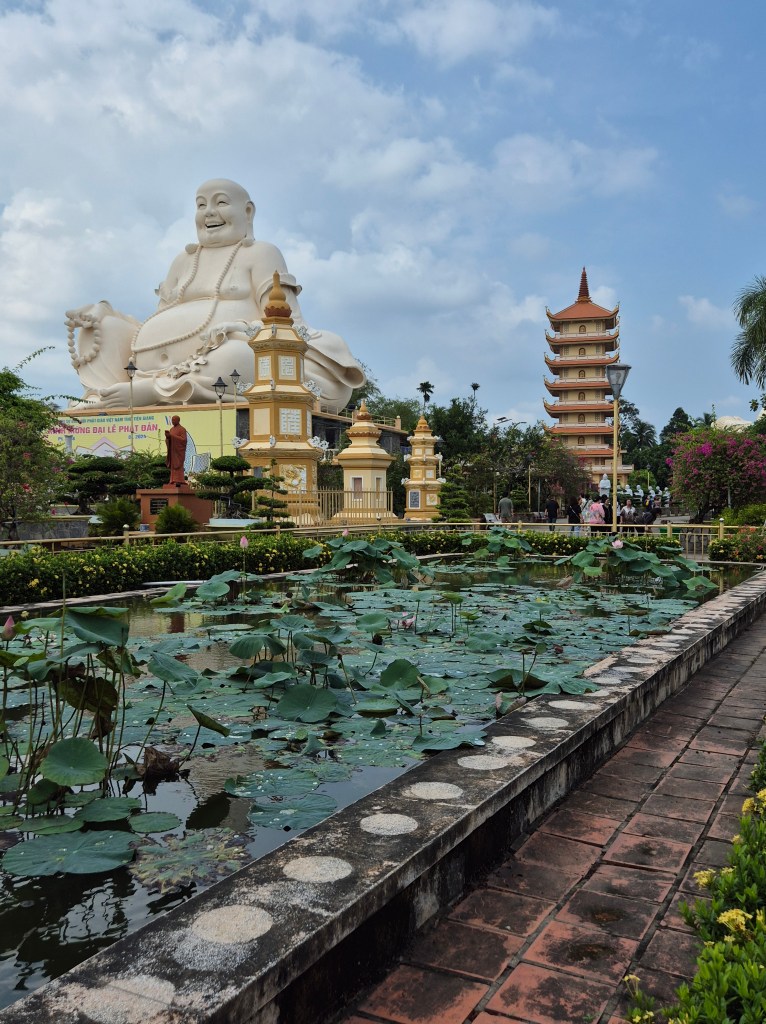
Returning to the shore we had a quick stop at a buddhist temple before being reminded several times to thank the guide and the driver which meant tip them.



Day 2 was just Andy on his own, a trip to the Cu Chi Tunnel, a 250km tunnel complex largely created during the Vietnam war and which was one of many tunnel complexes which may have been the primary reason why the Americans were finally defeated by the North Vietnamese in 1975. This story starts when the US Army built a base over an existing network of tunnels, originally built to allow Vietnamese soldiers to hide from and fight the French, who occupied Vietnam in 1945. This was extended in length and complexity, with 3 levels of tunnels and which included kitchens, munition factories and all the facilities which allowed the Vietcong to live underground, out of sight of the GIs. The guide’s father was a soldier during this time and fought from these tunnels. Hos uncle was killed in the area and other family members still suffer the effects of the US use of “agent orange” to defoliate the jungle. His passion and interest in telling the story was evident and made the trip both interesting and very moving.
The US Army were faced with an invisible army, emerging at night, causing havoc, destroying equipment, killing troops and then disappearing into nowhere, hiding in plain sight under the ground. This led to an arms race but as quickly as the US evolved tactics to find and destroy the tunnels, the Vietcong found ways to continue what they were doing. The whole site is fascinating, from a historical perspective, and horrific, from a human perspective.
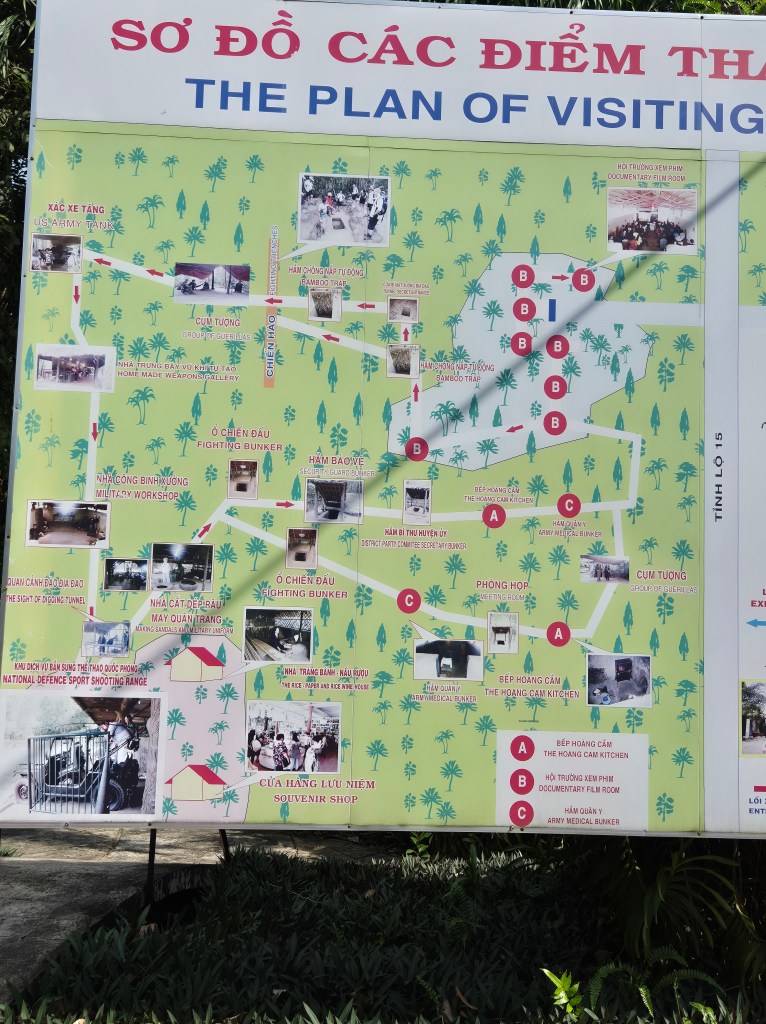
The whole area is now a sequence of different displays, ranging from a demonstration of how the tunnel entrances were hidden:
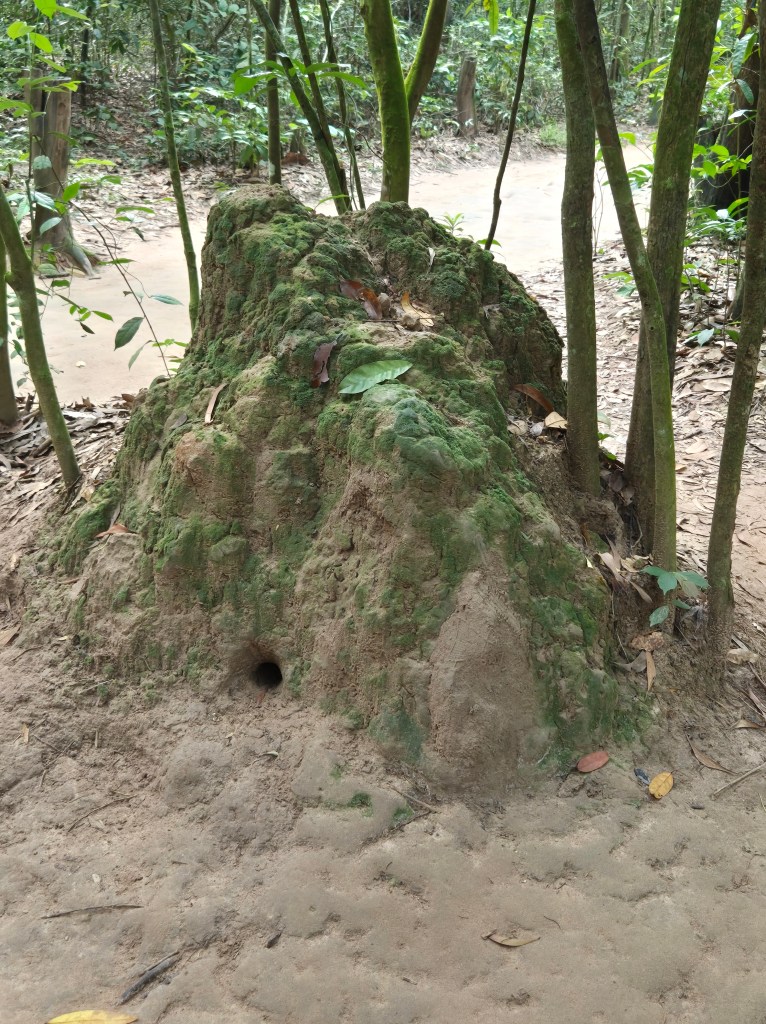
The disguising of air holes as ant hills
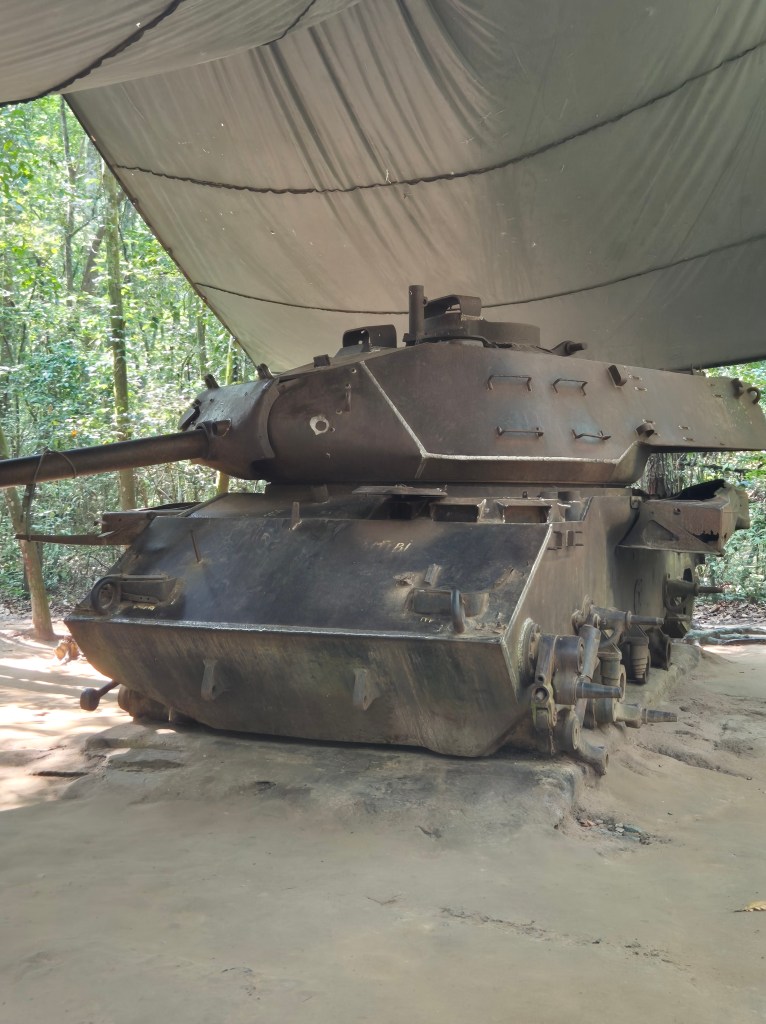
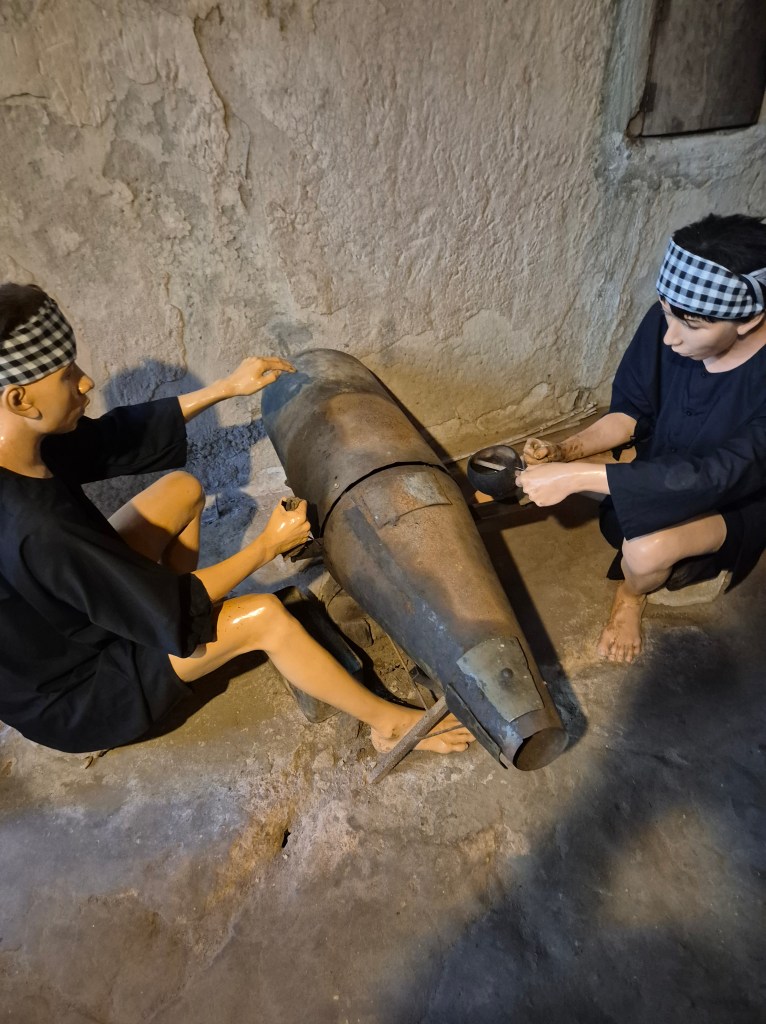
A mock-up of an undergroup workshop where unexploded US Air Force ordinance was recycled to make landmines used to cripple US tanks
Demonstrations of the various ways the Vietcong set traps for the US soldiers, most of which resulted in being impaled on spikes coated with animal dung
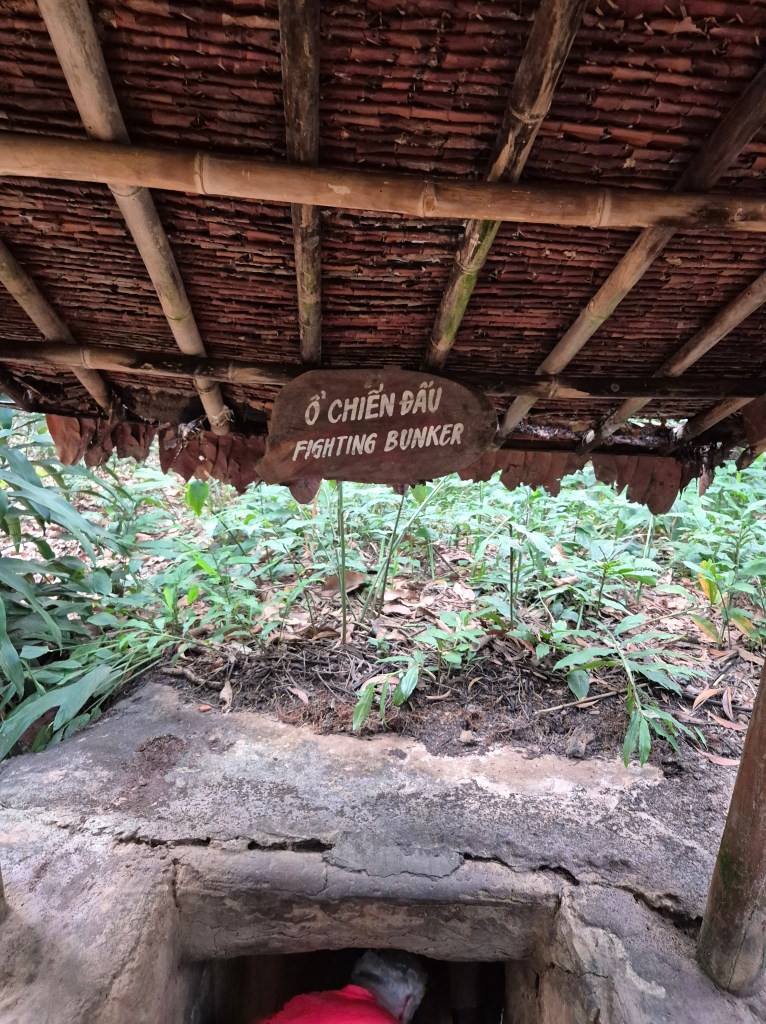
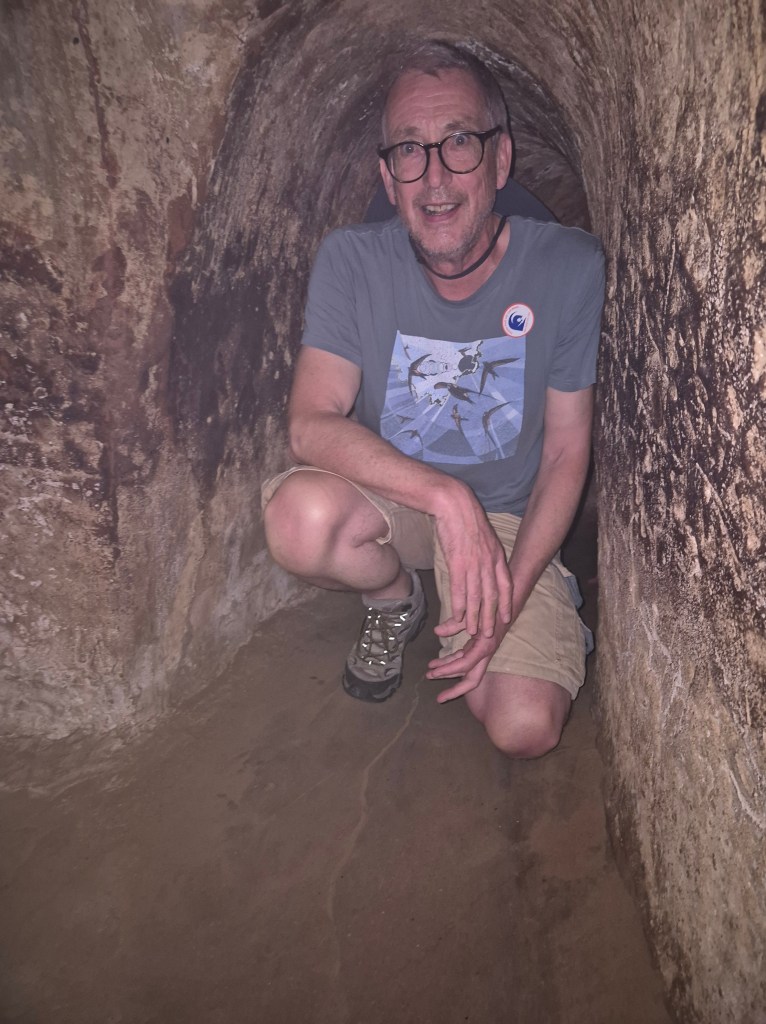
The finale, of course, was to experience the tunnel first hand in specially “westernised” (i.e. enlarged) tunnels. We had to go down one tunnel and then crawl 15 metres to the next shaft along:
It was not pleasant and living down there must have taken some getting used to:
Our guide gave a description of how they made and used tyre rubber to make sandals (this is a long video but in my opinion is worth the watch):
Part of the area is a firing range, so imagine you’re in the Vietnamese jungle..
This war was supposedly between supporters of the ideologies of capitalism and communism but of course was complicated by being a proxy for the Cold War between the west and communist Russia. The communists won and took over the whole of Vietnam in 1975. The irony is that communism didn’t work and although the Vietnamese state is still obstensibly communist, it is also very capitalist and thriving because of it.
As on other cruises, sea days are a chance to write a blog, do the washing, relax and of course join the team trivia with Billy (the cruise director from Canada who can’t pronounce English words and now waits for the Brits on board to correct him!). Last chance on this segment of the voyage to earn BigO points to be exchanged for prizes. Our team consisted of us Brits, 2 Canadians, 2 Australians (but British) and 2 Americans so we did quite well and finished 1st on our last quiz. Only enough for a luggage label or a pair of socks, so we will keep ours and hopefully upgrade to a hat or a bag?
Our last stop on this leg of the cruise was Singapore. I was last there in 1985 and was looking forward with more knowledge of my dad’s time there as a prisoner and of investigating places I now knew about.
We arranged a very specific itinerary with a driver and guide who met us off the boat. Our guide Tang was excellent and had obviously done research when he’d seen the itinerary.
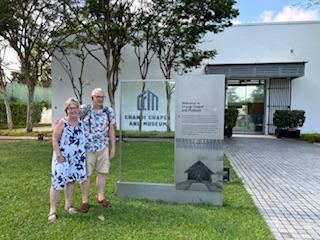
First stop was Changi Chapel and Museum. Last time I came it was inside the original prison, it has now been moved outside and is modern, full of helpful staff and a guided tour done by Temi a robot who reads the diary of a FEPOW, whose wife and son were also interred in Changi.


The communication information is true!


The exhibits are interesting , knowledgeable and numerous but it is the sounds accompanying them that makes it even more harrowing.
It is a shame that it is way to the east of the main city and does not have good public transport links. It is also not widely promoted as a place to visit.
From there we drove to Kranji War Cemetery which has 4,000 Commonwealth graves in a beautifully tended garden and a stone remembrance wall with 24,000 names of allied forces who have no graves as their bodies have not been found.
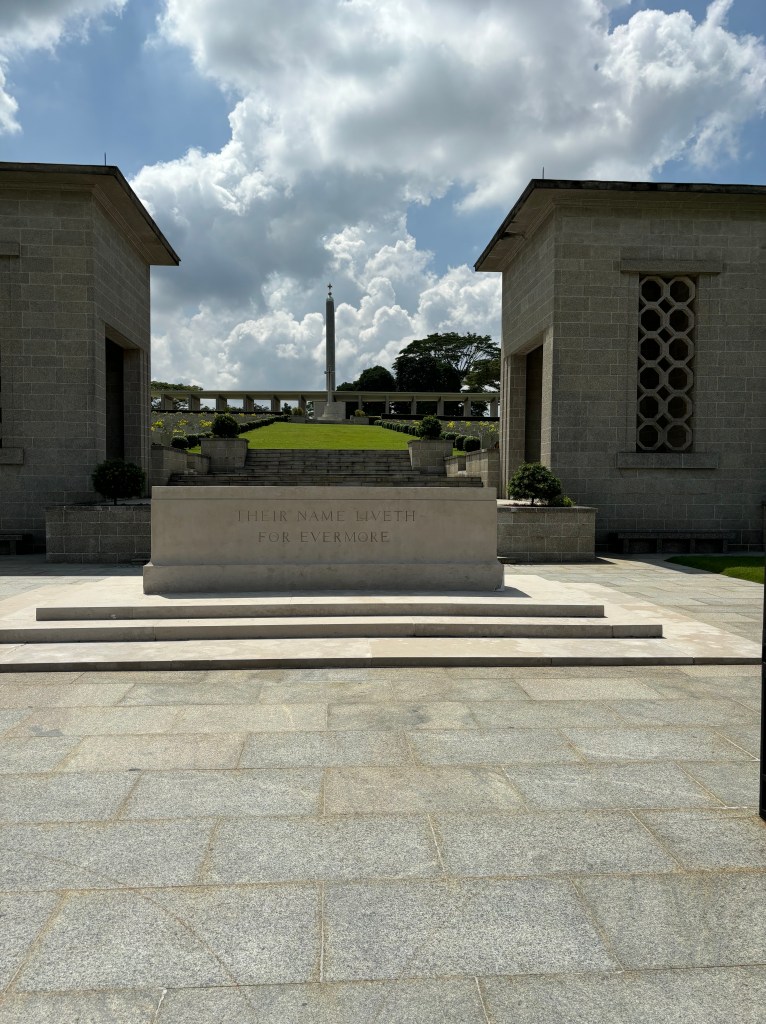
They are not the Forgotten Army in Singapore. We paid our respects and left.
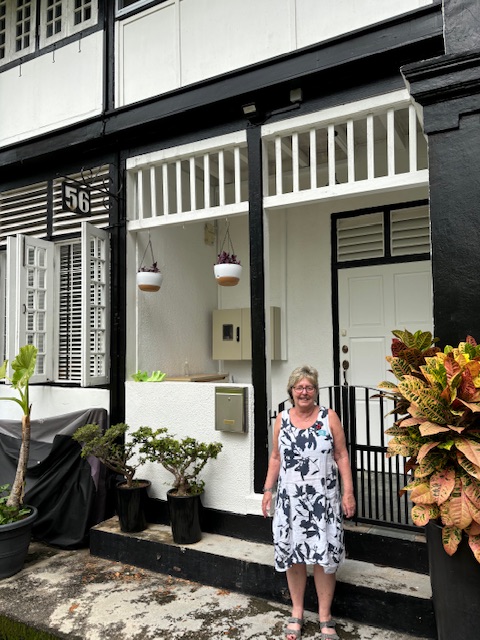
Our next stop was a long shot but worth a few minutes of investigation. We drove back into the outskirts of the city to a pleasant tree lined road and found 56 Monks Hill Terrace which is the address of the Chinese Postmaster named Seng who hid father and Cliff (his friend) after the surrender of the Japanese.
Our guide told us these houses used to be rented to senior civil servants but now we’re very desirable and only had 2 year leases when the Singaporeans have to bid to rent them. The romantic in me wanted the Seng family to still be there and although I was assured there was no chance, when I saw the window open which meant someone was in, I asked our guide to knock on the door. Reluctantly he did and having spoke to domestic helpers and the son of the family, they confirmed they had only lived there 18 months. A picture of the outside would have to do.
Our final stop was a treat and all down to our guide. I had asked to be driven down North Canal Street where the Post Office had been but from Google maps, discovered it no longer existed. We were driven there to discover it is now a 5* hotel right on the Singapore river. It apparently had the single longest counter in the world and its history as a Post Office is documented by photos and text along corridors in the hotel. Was this where he hid? It’s certainly big enough to get lost in.

We thanked our guide and driver and were dropped off in China Town where we had lunch in a thunderstorm!
We stopped at a Hindu temple and then easily got a train back to the dock area. One more little acknowledgement to FEPOWs is an information board by the dock.

A fitting day for Singapore and all it means to our family.

 Our Travels 2024 - 2025
Leave a reply to gla0b4117e58153 Cancel reply